
Shoulder Pain After a Car Accident: Causes, Symptoms & Recovery

Shoulder pain after a car accident shouldn't be ignored.
(AI generated)
After a car accident, most people focus on the injuries they can see or feel right away. If you're able to walk away from the crash and aren't in severe pain, it's easy to assume you're okay. However, shoulder injuries don't always cause immediate symptoms. Shoulder pain after a car accident may begin right away or develop gradually over the next several hours or even days.
Even if the discomfort seems mild, it shouldn't be ignored. Early evaluation can help identify a shoulder injury after a car accident before it leads to chronic pain, reduced range of motion, or other long-term complications.
In this article, we'll explain why your shoulder may hurt after a car accident, the most common injuries that can cause shoulder pain, how these injuries are diagnosed, and when it's important to seek medical care.
Why Shoulder Pain Happens After a Car Accident
During a collision, the vehicle stops or changes speed suddenly, but your body continues moving because of inertia. As a result, the shoulder joint is exposed to forces it isn't designed to withstand.
Several factors influence how much stress the shoulder experiences, including the direction of the impact, your seating position, where your hands were at the moment of the crash, and how the vehicle's safety systems respond.
The seat belt restrains your upper body, while the airbag deploys within milliseconds and changes how the force is distributed. If your hands are on the steering wheel or you instinctively brace yourself during the impact, additional force can travel through the shoulder joint.
In many cases, shoulder pain after a car accident is caused by the combined effect of these forces rather than a single direct blow to the shoulder.
Why Shoulder Pain May Not Appear Right Away
Delayed shoulder pain after a car accident is common. Many people feel little or no discomfort immediately after a crash, only to notice pain several hours or even days later.
One reason is the body's natural response to stress. During a car accident, your body releases adrenaline, which can temporarily reduce your perception of pain. As adrenaline levels return to normal, injuries that were initially masked may become more noticeable.
According to Curtis L. Beauregard, MD, the timing of shoulder pain does not always reflect the severity of the injury. Patients may initially experience little or no discomfort yet still have significant damage to the shoulder's soft tissues that becomes apparent over the following hours or days.
Common Shoulder Injuries After a Car Accident
The shoulder is a complex joint made up of bones, ligaments, tendons, muscles, and cartilage. Because so many structures work together, a car accident can cause several different types of shoulder injuries. Below are some of the most common car accident shoulder injuries and the symptoms they may cause.
| Injury | What it is | Common symptoms |
|---|---|---|
| Rotator Cuff Tear | A tear in one or more of the tendons that make up the rotator cuff, which helps stabilize and move the shoulder. | Pain when lifting the arm, weakness, nighttime pain, limited range of motion. |
| Labral Tear | A tear in the ring of cartilage that lines the edge of the shoulder socket and helps keep the upper arm bone in place. | A feeling of instability, clicking or catching, pain with certain movements, reduced strength. |
| AC Joint Injury | An injury to the acromioclavicular joint, where the collarbone meets the shoulder blade. | Pain at the top of the shoulder, discomfort with arm movement, tenderness to the touch. |
| Shoulder Dislocation | A complete separation of the upper arm bone from the shoulder socket. | Severe pain, a visible deformity, inability to move the arm normally. |
| Subluxation | A partial dislocation in which the shoulder briefly slips out of place and then returns to its normal position. | A sensation that the shoulder "slips", recurring discomfort during movement. |
| Fracture | A broken bone involving the upper arm, collarbone, or shoulder blade after a high-impact injury. | Sudden severe pain, significant swelling, bruising, pain with any movement. |
| Sprain/ Strain | A stretched or torn ligament, muscle, or tendon around the shoulder joint. | Pain, stiffness, mild to moderate swelling, discomfort during activity. |
| Biceps Tendon Injury | Damage to the tendon of the biceps muscle where it attaches near the shoulder. | Pain at the front of the shoulder, weakness when lifting or bending the arm, pain when rotating the forearm. |
| Whiplash-related Shoulder Pain | Shoulder pain caused by a neck injury rather than damage to the shoulder joint itself. | Pain that radiates from the neck into the shoulder, muscle tightness, sometimes tingling or numbness. |
As Curtis L. Beauregard, MD, explains, many shoulder injuries share similar symptoms despite affecting different structures within the joint. Shoulder pain, weakness, limited range of motion, or clicking may result from tendon injuries, joint instability, fractures, or even conditions affecting the cervical spine. A comprehensive evaluation is the most reliable way to determine the source of your pain and recommend the most appropriate treatment.
Schedule a shoulder evaluation to receive an accurate diagnosis and personalized treatment plan.
📞 Get HelpSymptoms You Should Never Ignore
Regardless of the type of injury, some symptoms should never be ignored after a car accident. If you notice one or more of the following, it's important to have your shoulder evaluated as soon as possible.
- Pain when lifting your arm or moving it away from your body.
- Weakness in the shoulder or arm that makes it difficult to lift or hold objects.
- Numbness or tingling that extends into the shoulder, arm, or fingers.
- Limited range of motion that makes everyday movements difficult.
- Clicking, a feeling of instability, or a sensation that the shoulder catches during movement.
- Pain at night that interferes with sleep or becomes worse when lying down.
- Pain around the shoulder blade that began after the collision.
- Pain that radiates down the arm, even if the main discomfort is in the shoulder.
- Swelling or significant bruising around the shoulder joint.
- Pain that continues to worsen over the days following the accident instead of gradually improving.
Can Whiplash or a Neck Injury Cause Shoulder Pain?
The source of shoulder pain isn't always the shoulder joint itself. After a car accident, pain around the shoulder may be caused by an injury to the cervical spine or irritation of the nerves that run from the neck into the shoulder and arm.
During whiplash, the head is suddenly thrown forward and backward, placing stress not only on the muscles and ligaments of the neck but also on the surrounding soft tissues. In some cases, the pain spreads beyond the neck and is felt in the shoulder, shoulder blade, or upper arm, even when the shoulder joint itself has not been injured.
That's why it's important for your doctor to determine where the pain is coming from. If your symptoms include numbness, tingling, significant weakness in the arm, or pain that extends below the shoulder, you may need additional evaluation of the cervical spine and nervous system in addition to an examination of the shoulder.
Depending on your symptoms, your doctor may recommend a cervical spine MRI or electromyography to determine whether your pain is caused by a shoulder injury or a neurological condition.
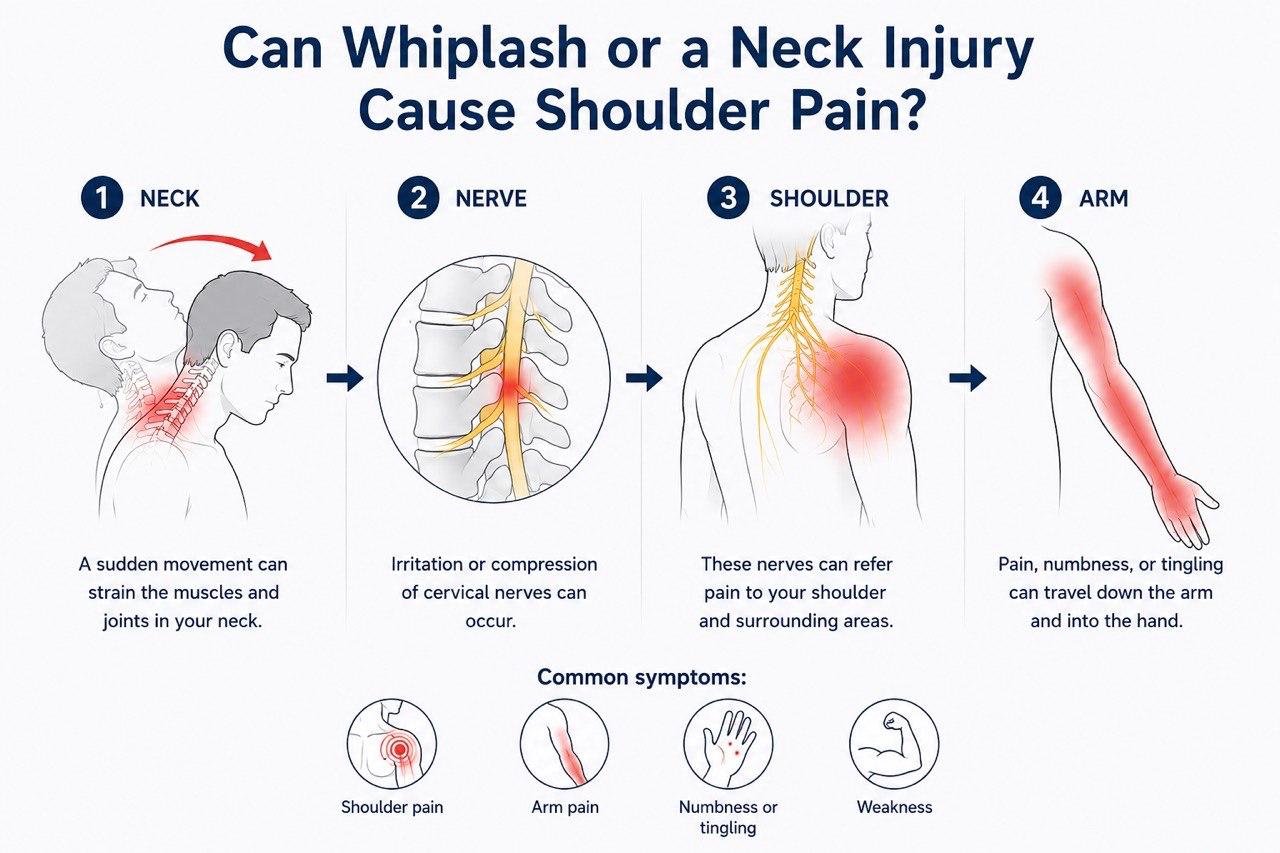
How neck injuries can cause shoulder pain after a car accident.
(AI generated)
How Shoulder Injuries Are Diagnosed
Diagnosis begins with a physical examination, not an MRI or X-ray. Your doctor will ask how the accident happened, when the pain started, and which movements make it worse. They will then examine your shoulder and perform specific orthopedic tests to assess joint stability, range of motion, and identify which structures may have been injured.
If the physical examination doesn't provide enough information, your doctor may recommend additional imaging tests.
| Diagnostic method | Why it is used |
|---|---|
| X-ray | Used to identify fractures, dislocations, and changes in bone alignment. However, X-rays do not show most injuries involving tendons, ligaments, muscles, or other soft tissues. |
| MRI | The most informative imaging test for evaluating the shoulder's soft tissues, including tendons, ligaments, the labrum, and muscles. |
| CT scan | Used when a more detailed evaluation of the bones or complex fractures is needed. |
| Ultrasound | Can evaluate certain tendons and muscles and allows the doctor to observe them during movement. |
In some cases, the symptoms may not be caused by the shoulder joint alone. If your doctor suspects a neck injury or nerve damage, additional tests may be recommended to evaluate the cervical spine and nervous system.
Depending on the findings, you may also be referred to another specialist. If the accident caused injuries beyond the shoulder, your care may involve both an orthopedic and a neurosurgeon.
Schedule an evaluation after a car accident.
Treatment for Shoulder Pain After a Car Accident
Treatment depends on the type of injury and the results of your evaluation. There is no one-size-fits-all approach, so your treatment plan will be tailored to your specific condition. In most cases, recovery begins with conservative treatment, while more invasive options are considered only when necessary.
1. Conservative Treatment
For many people, recovery begins with conservative treatment. This approach focuses on nonsurgical methods that help relieve pain, protect the injured tissues, and give the shoulder time to heal. Depending on the type and severity of the injury, treatment may include temporary activity modification, wearing a sling to support the arm, anti-inflammatory medications, and gradually returning to normal daily activities.
2. Physical Therapy
As the acute pain begins to improve, physical therapy becomes an important part of recovery. A personalized exercise program can help restore range of motion, strengthen the muscles around the shoulder, and improve joint stability.
3. Pain Management
If the pain does not improve or continues to interfere with your daily activities, the next step may be pain management. This approach focuses on reducing pain and improving your quality of life while your shoulder heals.
4. Diagnostic or Therapeutic Injections
In some cases, injections are used not only to relieve pain but also to help identify the source of your symptoms. They can provide your doctor with additional information about which structure is causing the pain.
5. Surgery
Surgery is not necessary for most people. It is usually considered only when conservative treatment has not provided sufficient improvement or when imaging shows an injury that cannot heal properly without surgical repair.
If your shoulder pain is related to a car accident, don't wait to seek medical attention. Early diagnosis and the right treatment plan can help restore shoulder function and reduce the risk of long-term complications.
How Long Does Recovery Take?
Recovery time depends primarily on the type and severity of the injury. Minor injuries often heal within a few weeks, while more serious injuries may take several months to recover.
| Injury | Estimated recovery time |
|---|---|
| Sprain/Strain | A few weeks to 2 months |
| AC Joint Injury | A few weeks to several months, depending on the severity of the injury |
| Rotator Cuff Tear | Several months; recovery after surgery typically takes longer |
| Labral Tear | Several months; recovery time depends on the extent of the injury and the treatment approach |
| Shoulder Subluxation | A few weeks to several months |
| Shoulder Dislocation | Typically several months, especially if the surrounding tissues were also injured |
| Fracture | About 2 to 6 months, depending on the location and severity of the fracture |
| Biceps Tendon Injury | A few weeks to several months |
| Whiplash-related Shoulder Pain | A few weeks to several months, depending on the severity of the neck injury |
Recovery depends on more than just the diagnosis. The severity of the injury, your age, overall health, any underlying medical conditions, and how soon you seek medical care after the accident can all affect how long healing takes.
What Should You Do If Your Shoulder Hurts After a Car Accident?
If you develop shoulder pain after a car accident, don't assume it will go away on its own. Taking the following steps can help identify a possible injury early and ensure you receive the right treatment.
1. Limit activity that makes the pain worse. Avoid movements that increase your pain, and don't lift heavy objects until your shoulder has been evaluated.
2. Don't try to diagnose yourself. Similar symptoms can be caused by different injuries, and each may require a different treatment approach.
3. Schedule an evaluation. A medical examination and, if needed, imaging tests can help identify the cause of your pain and rule out more serious injuries.
4. Follow your treatment plan. Starting treatment soon after a diagnosis can improve your chances of restoring normal shoulder function and reducing the risk of long-term problems.
Get your shoulder checked after a car accident.
When Should You Seek Emergency Care?
After a car accident, some symptoms may indicate a serious injury to the shoulder joint, bones, blood vessels, or nerves. If you notice any of the following, seek medical attention as soon as possible:
- Severe pain or pain that rapidly gets worse and does not improve with rest.
- A visible deformity of the shoulder or a feeling that the joint is out of place.
- Inability to lift or use your arm.
- Loss of sensation in the shoulder, arm, or fingers.
- Significant weakness in the arm that developed after the accident.
- Rapidly increasing swelling or extensive bruising around the shoulder joint.
- A change in the color or temperature of the arm, or if it feels colder than the other arm.
- An open wound or bleeding around the shoulder.
- Shoulder pain accompanied by severe dizziness, loss of consciousness, or other symptoms after the accident that may indicate an associated brain injury.
FAQ
Shoulder pain may not appear until several hours or even days after a car accident. This can happen because of the body's natural response to injury and the gradual development of inflammation. Learn more in the Why Shoulder Pain May Not Appear Right Away section.
A seat belt helps protect you from serious injuries, but it also absorbs some of the force during a collision. As a result, you may experience pain or discomfort in the shoulder after a car accident.
The side of your shoulder pain may offer clues about how the injury occurred, but it cannot identify the exact cause on its own. Pain in either shoulder may result from a rotator cuff injury, ligament sprain, labral tear, or muscle strain. In some cases, pain that spreads into the shoulder blade or down the arm may actually originate from the neck or irritated nerves. A medical evaluation is the only way to determine the source of your symptoms and the most appropriate treatment.
X-rays are excellent at showing bones but cannot detect most injuries involving tendons, ligaments, muscles, or other soft tissues. If your symptoms continue, your doctor may recommend additional imaging, such as an MRI.
Not always. Whether you need an MRI depends on the findings of your examination, the suspected injury, and the results of any other tests. In many cases, your doctor will perform a physical examination before deciding whether additional imaging is needed.
Sometimes the source of the pain is not the shoulder joint itself but the cervical spine. Whiplash can cause pain that spreads into the shoulder, shoulder blade, or arm.
Even a low-speed collision can cause a shoulder injury. The risk depends not only on the force of the impact but also on factors such as your body position, the direction of the collision, and how the shoulder was loaded during the crash.
Most shoulder injuries can be treated without surgery. Surgical treatment is usually considered only when a serious injury is present or conservative treatment does not provide the expected results.
If shoulder pain develops after a car accident, gets worse, limits your movement, or does not improve within a few days, you should schedule an evaluation. Early diagnosis can help identify the cause of your symptoms and determine the most appropriate treatment.
Don't Ignore Shoulder Pain After a Car Accident
If your shoulder still hurts after a car accident—even if the pain started days later—schedule an evaluation as soon as possible. Early diagnosis can help prevent long-term complications and gives you the best chance of a full recovery.
📞 Call us: (833) 863-6633
📞 Schedule Your EvaluationBibliography
- https://www.orthoinfo.org/diseases--conditions/shoulder-trauma-fractures-and-dislocations/
- https://www.orthoinfo.org/diseases--conditions/common-shoulder-injuries/
- https://www.orthoinfo.org/diseases--conditions/rotator-cuff-tears/
- https://www.orthoinfo.org/diseases--conditions/shoulder-separation/
- https://pmc.ncbi.nlm.nih.gov/articles/PMC3977376/
- https://pmc.ncbi.nlm.nih.gov/articles/PMC2443117/
- https://www.orthoinfo.org/diseases--conditions/shoulder-joint-tear-glenoid-labrum-tear/