EMG & nerve conduction studies after a car accident or work injury
If you were injured in a car accident or at work, EMG and nerve conduction testing can help evaluate possible nerve damage, identify where the problem may be coming from, and guide the next step in treatment
Electromyography (EMG) and nerve conduction studies (NCS) are diagnostic tests used to evaluate how your nerves and muscles are functioning.
An EMG measures electrical activity in the muscles, while an NCS measures how electrical signals travel through the nerves. These tests are often performed together to help identify nerve or muscle dysfunction and determine where the problem may be located
Why you may need an EMG after a car accident or work injury
Car accidents and work-related injuries can affect nerves through compression, stretching, or inflammation. EMG and nerve conduction testing can help evaluate possible nerve damage and determine where the problem may be located
EMG and nerve conduction testing can help determine whether an injury has affected your nerves or muscles and provide information about the location and severity of the problem
1
Nerve Damage
Signs that a nerve is not functioning normally
2
Location of the Injury
Where along the nerve or nerve root the problem may be located
3
Severity of the Problem
How significantly nerve or muscle function has been affected
4
Nerve vs. Muscle Problems
Whether abnormal findings are more consistent with a nerve or muscle disorder
What to expect during your EMG
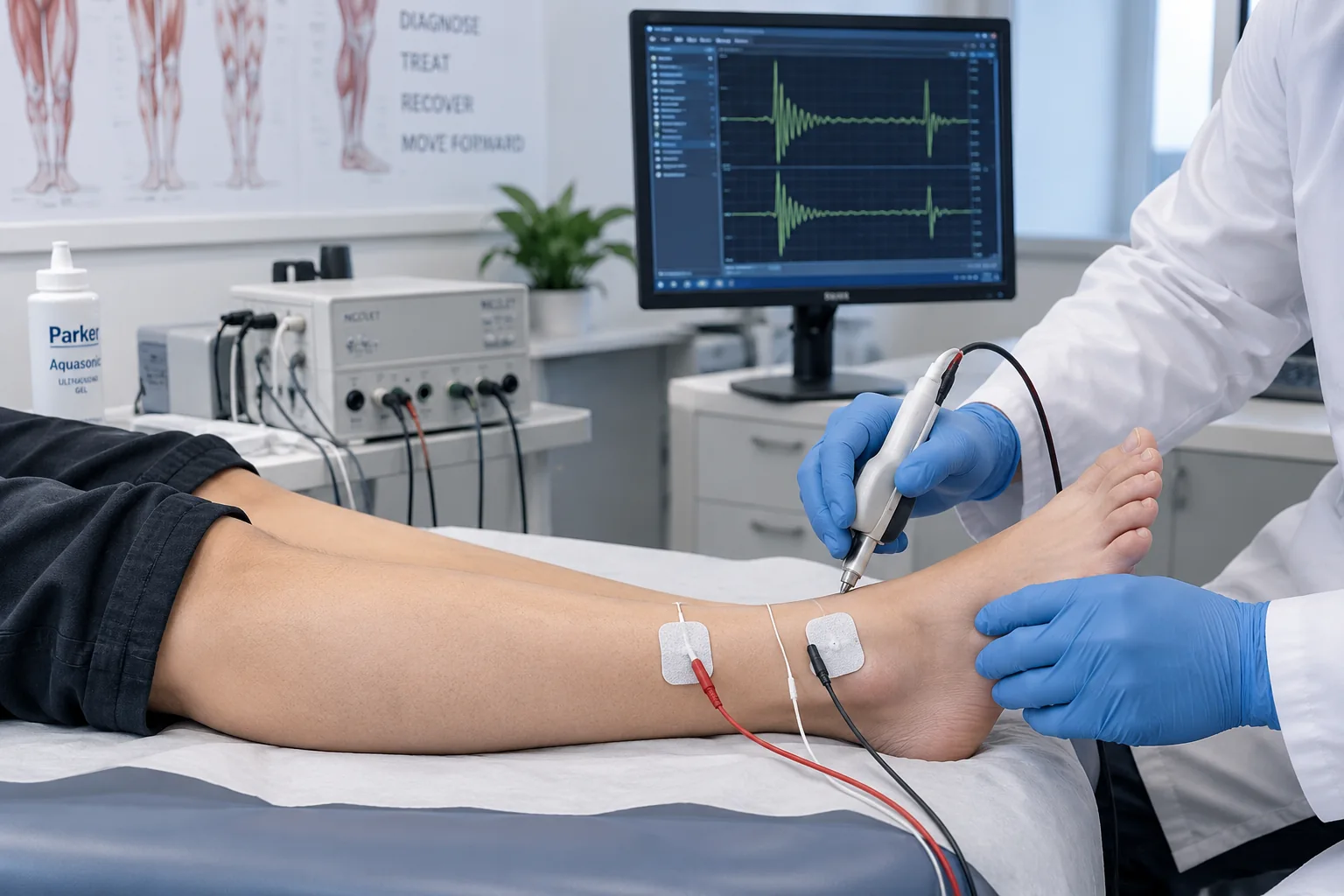
An EMG and nerve conduction study is typically performed in two parts:
STEP 1: NERVE CONDUCTION STUDY (NCS)
Small electrodes are placed on the skin to measure how electrical signals travel through your nerves
STEP 2: NEEDLE EMG
A thin needle electrode is inserted into selected muscles to measure their electrical activity at rest and during movement
Generally well tolerated — The nerve conduction study may cause a brief tingling sensation, while the needle EMG may cause mild, temporary discomfort
Typically 30–90 minutes — Depending on the areas being evaluated
When may an EMG be recommended after an injury?
An EMG may be recommended when symptoms after a car accident or work injury suggest that a nerve may be affected.
EMG testing is often most informative about 2–4 weeks after an injury, although the appropriate timing depends on your symptoms and the type of nerve injury. Your doctor will determine when the test should be performed
Numbness & Tingling
Numbness or tingling in the arms, hands, legs, or feet
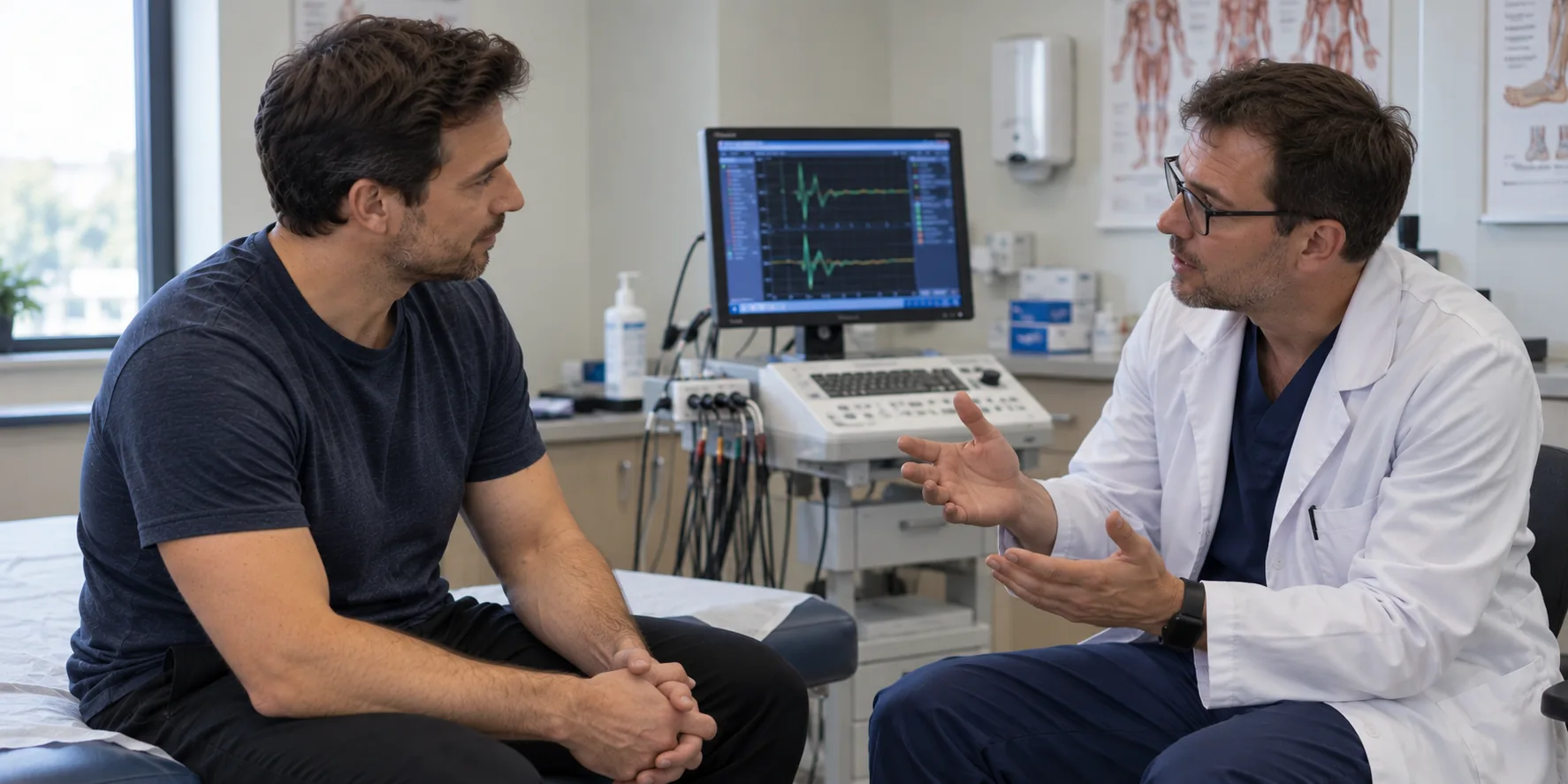
Your EMG results help your doctor understand how your nerves and muscles are functioning and provide information about where the problem may be coming from. Based on the findings, your doctor can recommend the appropriate next step in your care
EMG Results
Review nerve and muscle function
Diagnosis
Identify the location and extent of the problem
Treatment Plan
Physical therapy, pain management, injections, or surgical evaluation
Shout out to NEO Surgical. They’ve been amazing help with my back problems. Dr. Powell, Al, Flo, Elana, and staff have been amazing.
Christopher Devaughn
September 14, 2026
All the people here treat me very well, there all 5 star's
Jaqui Cruz
September 23, 2026
I would like to take a moment to thank everyone at Neo Surgical for helping me through my care during my injuries. To the staff and especially the physical therapy ladies, you all were so supportive during this traumatic event. A special shoutout to Roberto and Carmen who is on maternity leave at the moment. You two help me tremendously and made sure I was well taken care of for each of my visits. To the office manager Crystal thank you for going above and beyond to calm my nerves during this difficult time. Blessings to you all!
Saad Krichi
August 18, 2026
The staff are very kind and helpful throughout the therapy process. Florence was especially helpful in showing me what stretches and exercises to do to maintain my neck and shoulder health. Dr. Powell and Dr. Al were also a pleasure to work with. Roberto and Carmen made sure I had my appointments set up and would help with transportation when needed. Overall positive experience with them.
german Panosty
September 3, 2026
They nice peoples Elena , Florence , carmille Doctor Powell 💯🙏
Kevin Charles
September 14, 2026
I love how dr Powell is so informative and I love going to neo surgical because they are so helpful in every way and I feel at home every time I’m there. Their service is impeccable and before I started going there I was always in pain due to a pinch nerve and as I started my treatment the pain been subsided and I am thankful for choosing neo surgical group as my place of treatment, trust me you won’t regret getting service from neo surgical group I guarantee
OMAR RAMOS
September 17, 2026
Great treatment facility, been taken care by Dr. Powell very attentive and has great attention to detail. Goes over and explains everything. Great place over all, totally recommended.
Tyshon Lewis
September 1, 2026
⭐⭐⭐⭐⭐
I had a wonderful experience with Neo Surgical Group. From the moment I walked in, the staff was professional, welcoming, and caring. Everyone took the time to answer my questions, explain everything clearly, and make me feel comfortable throughout the entire process. Special thanks to Flo, Camille, Elena and all the docs.
I truly appreciate the level of care and attention I received. The entire team was kind, knowledgeable, and professional, and I felt that I was in good hands every step of the way. I would definitely recommend Neo Surgical Group to anyone looking for a caring and professional surgical team!
Andres Toro
August 27, 2026
Great staff and doctors that have been helping me deal with my back recovery
Lourdevic Delva
September 29, 2026
I highly recommend NEO Surgical Group Orlando. Specially Dr Powell he did an amazing job.
Frank Alcantara
September 15, 2026
The staff was very attentive and professional. The staff was friendly and empathetic
Thank you Front Desk staff especially Roberto, Camille and Cindy.
Jakeem Burke
September 15, 2026
Great customer service awesome workers
Meet our doctors
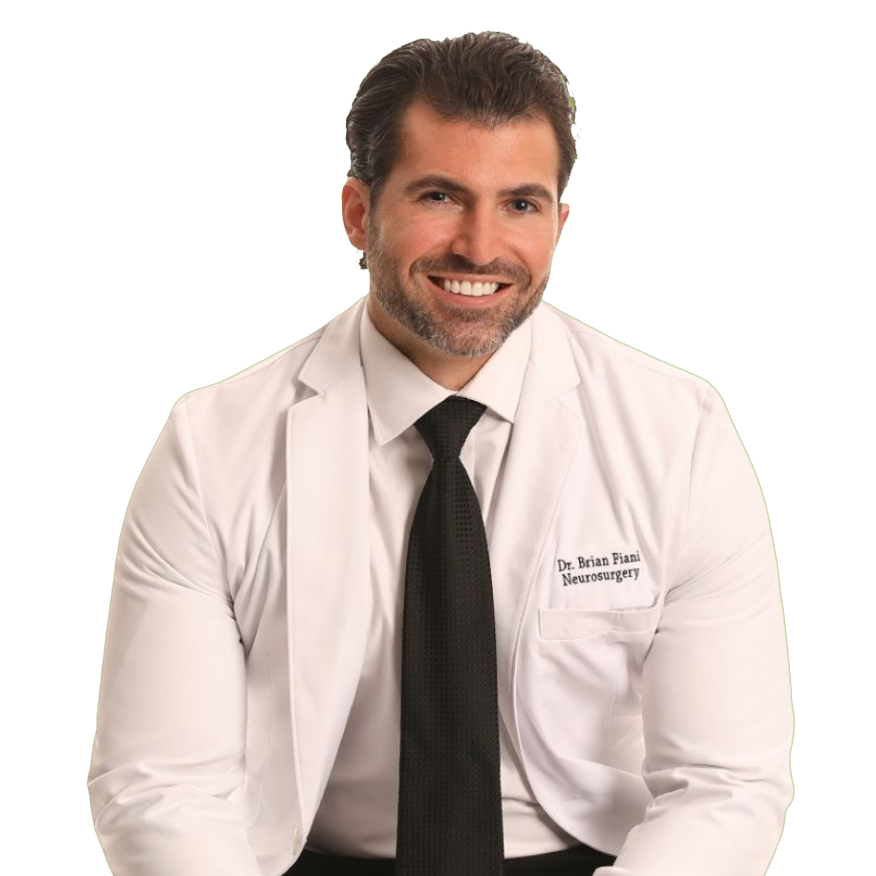
Brian M. Fiani, DO
Dr. Brian M. Fiani is a board-certified neurosurgeon specializing in minimally invasive spine surgery and neuro-navigation. With experience at Weill Cornell and Mendelson Kornblum Orthopedics, he is dedicated to advancing neurosurgical care.
An assistant professor at Michigan State University, he has published over 100 peer-reviewed articles and presented at global conferences. Recognized with multiple awards, he actively contributes to medical education, research, and community service.
Board Certified Neurosurgeon
Wesleyan University, University of Kansas School of Medicine, University of Florida, Dartmouth Institute
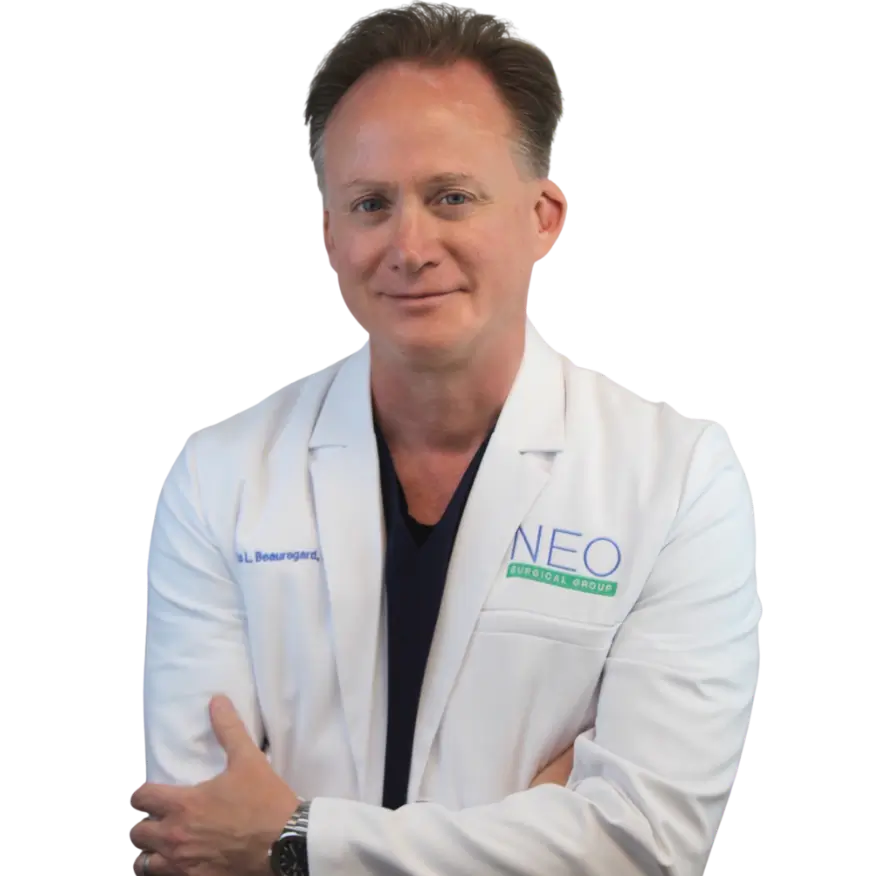
Dr. Beauregard approaches each patient’s unique problems with an individualized plan to optimize recovery and surgical outcomes. His mission is to provide patients with compassionate and comprehensive care focused on developing a treatment strategy to meet the patient’s specific goals and lifestyle.
Richard Valenzuela, M.D. is a fellowship-trained Orthopedic Surgeon who specializes in Sports Medicine. Dr. Valenzuela’s practice focuses on the treatment of shoulder, elbow, knee, ankle injuries resulting from trauma, sport related injuries, and degenerative conditions.
Dr. Valenzuela is committed to outstanding clinical care and strives to provide the most advanced operative and non-operative treatment of injury related orthopedic and sports medicine conditions with an emphasis on elimination of pain, joint preservation, and restoration of function to safely allow patients to return to daily activities as soon as possible.
Dr. Alberto de Arrigoitia is an established Chiropractor with over 25 years of experience. Dr. Al began his college career at the University of South, graduating with a B.S. in Microbiology. The following year he embarked on an internship at Florida Hospital in Clinical Laboratory. After several years of practicing as a Medical Technologist in Central Florida he entered Logan College of Chiropractic; graduating the class of 1997. Since graduating he has practiced at several different locations throughout the state of Florida.
Dr. Dale Hanson has been providing chiropractic care in Tampa, Florida, for over 17 years, serving local residents, athletes, and injury victims seeking a natural approach to pain relief without harmful medications. He specializes in treating auto accident and personal injury victims through a multidisciplinary approach, including Physical Therapy, Chiropractic Adjustments, diagnostic imaging, and collaboration with Orthopedic and Neurosurgeons to restore health and vitality.
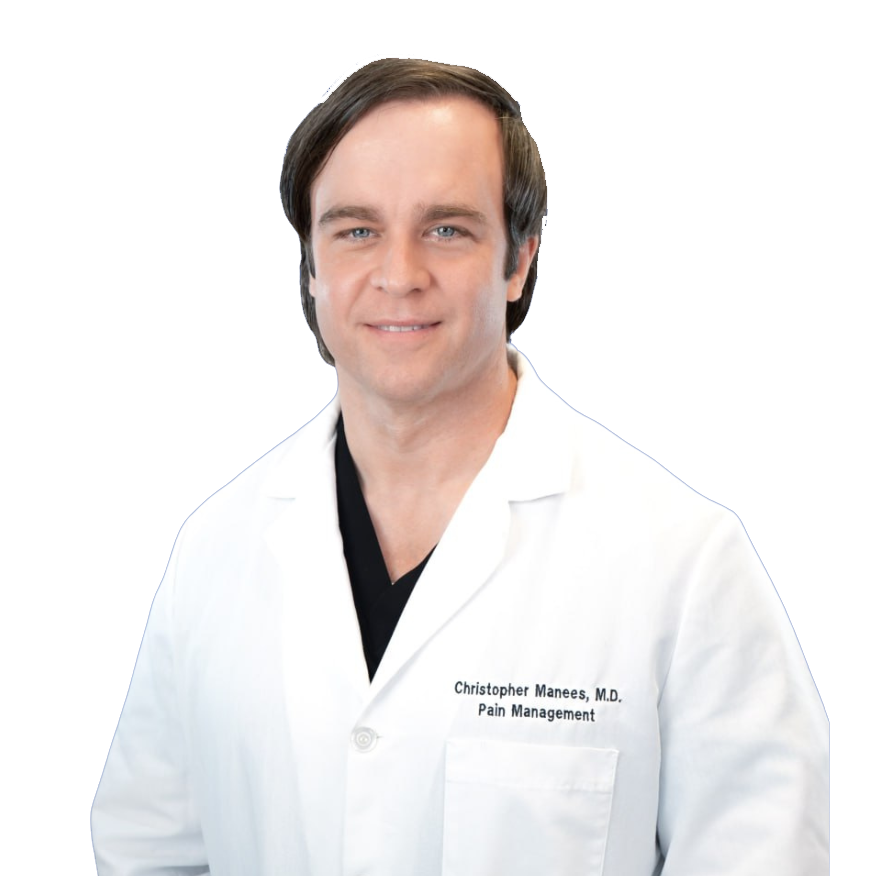
Dr. Christopher Robert Manees is a Pain Management Specialist. He graduated with honors from Wayne State University School Of Medicine in 2006. Having more than 18 years of diverse experiences, especially in PAIN MANAGEMENT.
Dr. Christopher Manees worked to manage medications in a diverse patient population and was involved in approximately 1400 interventional procedures including joint injections, epidural steroid injections, facet injections, radiofrequency, neurolysis, tunneled catheter placement, spinal cord stimulation, intrathecal trials and management, and kyphoplasty.
Dr. Carole Martin is a licensed Doctor of Chiropractic with more than 20 years of experience providing comprehensive chiropractic care for patients with musculoskeletal conditions, spinal disorders, and motor vehicle accident injuries. She specializes in personalized treatment plans, spinal adjustments, rehabilitation, and conservative pain management, helping patients reduce pain, restore mobility, and improve their overall quality of life.
Dr. Aliraza G. Jaffer is a board-certified Interventional Pain Management Physician and Anesthesiologist with more than 25 years of experience treating acute and chronic pain conditions. He specializes in advanced minimally invasive pain procedures, regenerative medicine therapies, and comprehensive pain management solutions designed to improve function and quality of life.
Dr. Gabriel J. Hernandez Figueroa is a Doctor of Chiropractic dedicated to helping patients recover from injuries, relieve pain, and improve their overall quality of life through evidence-based, conservative care. He has extensive experience treating patients of all ages and specializes in musculoskeletal conditions, spinal rehabilitation, and personal injury cases.
Dr. Jonathan Nzoma is a board-certified orthopedic surgeon specializing in sports medicine, joint injuries, and minimally invasive orthopedic procedures. With extensive experience treating athletes and active individuals, he is dedicated to helping patients return to the activities they love through personalized, evidence-based care.
Wear comfortable clothing and keep the skin clean and free of lotions, creams, or oils on the day of your test. Let your doctor know about any medications you take or medical devices you have before the procedure
Yes, most patients can drive themselves home and return to normal activities after an EMG. You may have mild temporary muscle soreness after the test. Follow any specific instructions provided by your doctor
An EMG can help detect abnormal nerve function that may be associated with a pinched or compressed nerve. It does not show a herniated disc itself, so your doctor may use EMG together with imaging tests such as an MRI.
A normal EMG does not necessarily explain or rule out every possible cause of your symptoms. Your doctor may consider your physical examination, medical history, imaging, and other tests to determine the next step.
It depends on your symptoms and injury. Your doctor may recommend additional tests, such as an MRI or other imaging, to better understand the cause of your symptoms and determine the appropriate treatment.
Your EMG results are typically available by the next business day. Your doctor will explain the findings, what they mean for your condition, and what the next steps in your care may be.
EMG testing is available at all locations. Contact our team at (833) 863-6633 to schedule a consultation and discuss whether EMG testing may be appropriate for you
Schedule a Consultation
If you’re experiencing ongoing symptoms after a car accident or work injury, schedule a consultation with NEO Surgical Group to find out whether EMG and nerve conduction testing may be appropriate for you
To provide the best experiences, we use technologies like cookies to store and/or access device information. Consenting to these technologies will allow us to process data such as browsing behavior or unique IDs on this site. Not consenting or withdrawing consent, may adversely affect certain features and functions.
Functional
Always active
The technical storage or access is strictly necessary for the legitimate purpose of enabling the use of a specific service explicitly requested by the subscriber or user, or for the sole purpose of carrying out the transmission of a communication over an electronic communications network.
Preferences
The technical storage or access is necessary for the legitimate purpose of storing preferences that are not requested by the subscriber or user.
Statistics
The technical storage or access that is used exclusively for statistical purposes.The technical storage or access that is used exclusively for anonymous statistical purposes. Without a subpoena, voluntary compliance on the part of your Internet Service Provider, or additional records from a third party, information stored or retrieved for this purpose alone cannot usually be used to identify you.
Marketing
The technical storage or access is required to create user profiles to send advertising, or to track the user on a website or across several websites for similar marketing purposes.