
Hip Pain After a Car Accident: Causes, Symptoms & Treatment

Hip pain after a car accident may develop immediately or appear hours or days later. It can result from injuries to the hip joint, bones, muscles, or ligaments, or originate in the lower back or pelvis.
Even mild pain or the ability to walk doesn't rule out a serious injury. New or worsening symptoms should be evaluated by a medical professional. Treatment depends on the underlying cause and severity. Learn more in our guide to Car Accident Injuries: Common Types, Symptoms, Diagnosis & Treatment.
What Causes Hip Pain After a Car Accident?
During a car accident, the hip can be subjected to a direct impact, compression, or sudden twisting forces. For example, when the knee strikes the dashboard, the force can travel through the femur to the hip joint. In a side-impact collision, the hip and pelvis may be injured directly.
The type of injury depends on the force and direction of the impact, body position, and other circumstances of the crash.
Hip Fractures and Acetabular Fractures
A severe collision can cause a fracture of the proximal femur (the upper part of the thigh bone) or the acetabulum, the socket in the pelvis that holds the head of the femur.
Although both injuries affect the hip region, they differ in location and treatment. Acetabular fractures are often associated with high-energy trauma, including serious motor vehicle accidents.
These injuries can cause severe pain, significant movement restrictions, and difficulty bearing weight on the affected leg. They require urgent medical evaluation.
Hip Dislocation
A hip dislocation occurs when the head of the femur is forced out of the hip socket. In a car accident, this can happen after a powerful impact, such as when a bent knee strikes the dashboard.
Symptoms typically include sudden, severe pain, a major loss of mobility, and sometimes an abnormal leg position. A dislocation may also damage nearby nerves, blood vessels, and soft tissues.
Hip dislocation is a medical emergency that requires immediate treatment. Do not attempt to reposition the joint yourself or put weight on the injured leg.
Muscle Strains, Sprains, and Contusions
Sudden movements or direct impacts during a collision can injure the soft tissues around the hip. Common types of injuries include:
- Muscle strains: Overstretching or partial tearing of muscle fibers.
- Ligament sprains: Stretching or tearing of ligaments that help stabilize the joint.
- Contusions: Bruising of muscles and other tissues caused by a direct impact.
These injuries may cause localized tenderness, swelling, bruising, and stiffness. Their severity can range from mild tissue damage to more extensive tears.
Many soft tissue injuries can be treated without surgery, but fractures and other serious injuries should be ruled out before treatment begins.
Hip Labral Tears
The hip labrum is a ring of cartilage that surrounds the edge of the hip socket. It helps stabilize the joint and supports smooth movement of the femoral head.
Sudden twisting or excessive force during a collision can damage the labrum. Groin pain after a car accident may be a sign of a labral tear, particularly when discomfort worsens with hip rotation or prolonged sitting.
Some people also experience clicking, catching sensations inside the joint, or reduced mobility. However, these symptoms can occur with other conditions, so a medical evaluation is needed to confirm the diagnosis.
Hip Bursitis and Other Soft Tissue Irritation
Hip pain after a collision can also result from irritation of the tissues surrounding the joint, including tendons and bursae. Bursae are small, fluid-filled sacs that reduce friction between bones and soft tissues.
A direct impact or increased stress on the area may contribute to inflammation of a bursa, known as bursitis. This can cause pain along the outside of the hip, which may worsen with pressure or when lying on the affected side.
Tendon irritation or injury can produce similar symptoms. The underlying cause depends on the injury mechanism and examination findings.
What Are the Symptoms of a Hip Injury After a Car Accident?
Symptoms vary depending on the type and severity of the injury. Pain isn't always limited to the hip joint and may extend to surrounding areas.
Common symptoms include:
- Hip or groin pain: May worsen with movement, bending the leg, or putting weight on the affected side.
- Buttock or thigh pain: May radiate down the leg and cause discomfort while walking.
- Stiffness and reduced range of motion: Can make it difficult to bend or rotate the hip, sit down, or stand up.
- Swelling, bruising, and tenderness: May indicate damage to the surrounding soft tissues.
- Limping or changes in gait: May result from pain, weakness, or difficulty bearing weight on the injured leg.
The location of the pain can help a doctor identify its possible source. For example, groin pain may suggest an injury involving structures inside the hip joint, while pain along the outside of the hip may be related to surrounding soft tissues.
Why Does Hip Pain Start Days After a Car Accident?
Delayed hip pain after a car accident can develop hours or even days after a collision, even if there was little or no discomfort immediately afterward. This doesn't necessarily mean the injury occurred later. In some cases, symptoms simply take time to become noticeable.
Several factors may explain why hip pain develops later:
- Changes in pain perception: The body's stress response during an accident can temporarily reduce pain awareness. As the initial stress subsides, previously unnoticed discomfort may become more apparent.
- Inflammation: Injured muscles, ligaments, and other tissues may gradually develop swelling and inflammation, leading to increased pain and reduced mobility.
- Increasing stiffness: Hip movement may feel relatively normal at first but become more painful over time as injured tissues react to the trauma.
- Pain triggered by activity: Some injuries become more noticeable during walking, climbing stairs, or prolonged sitting, when additional stress is placed on the affected area.
Delayed symptoms don't always indicate a minor injury. Even fractures without significant displacement may initially cause only mild or moderate discomfort.
Hip Pain After a Car Accident?
Experiencing hip pain, stiffness, or difficulty walking after a collision? NEO Surgical Group can evaluate accident-related orthopedic injuries and discuss appropriate next steps.
Call Now (833) 863-6633Can Hip Pain After a Car Accident Come From Your Back or Pelvis?
Hip pain after a car accident doesn't always originate in the hip joint itself. It can also come from the lower back, pelvic bones, or sacroiliac joint.
Lower back and hip pain after a car accident may result from injuries affecting multiple structures or from referred pain. For example, irritation of nerve roots in the lower back can cause pain, numbness, or tingling in the buttock and leg.
Pelvic pain after a car accident may be associated with injuries to the pelvic bones, muscles, or sacroiliac joint. Because these conditions can cause similar symptoms, a physical examination and, when indicated, additional imaging tests may be needed to identify the source of the pain.
When Is Hip Pain After a Car Accident an Emergency?
Severe hip pain after a car accident may indicate a fracture, dislocation, or another serious injury. Some injuries can also affect nearby nerves or blood vessels and require immediate medical attention.
Seek emergency medical care if you experience any of the following symptoms:
- Severe or rapidly worsening pain, especially after a serious collision.
- Inability to stand or bear weight on the affected leg due to pain or restricted movement.
- Visible deformity or an abnormal leg position, including a leg that appears shortened or unusually rotated.
- Loss of sensation, significant numbness, or weakness in the injured leg.
- Signs of impaired circulation, such as a foot that becomes cold, pale, or bluish.
If you suspect a fracture, dislocation, or blood vessel injury, call 911. Do not attempt to walk, test the leg's range of motion, or reposition the joint yourself.
How Are Hip Injuries Diagnosed After a Car Accident?
Diagnosing a hip injury begins with a review of the accident and the patient's symptoms. The doctor will ask when the pain started, where it is located, and which movements make it worse.
During the physical examination, the doctor assesses the hip's range of motion, sensation in the affected leg, swelling, and the patient's ability to bear weight, when it is safe to do so.
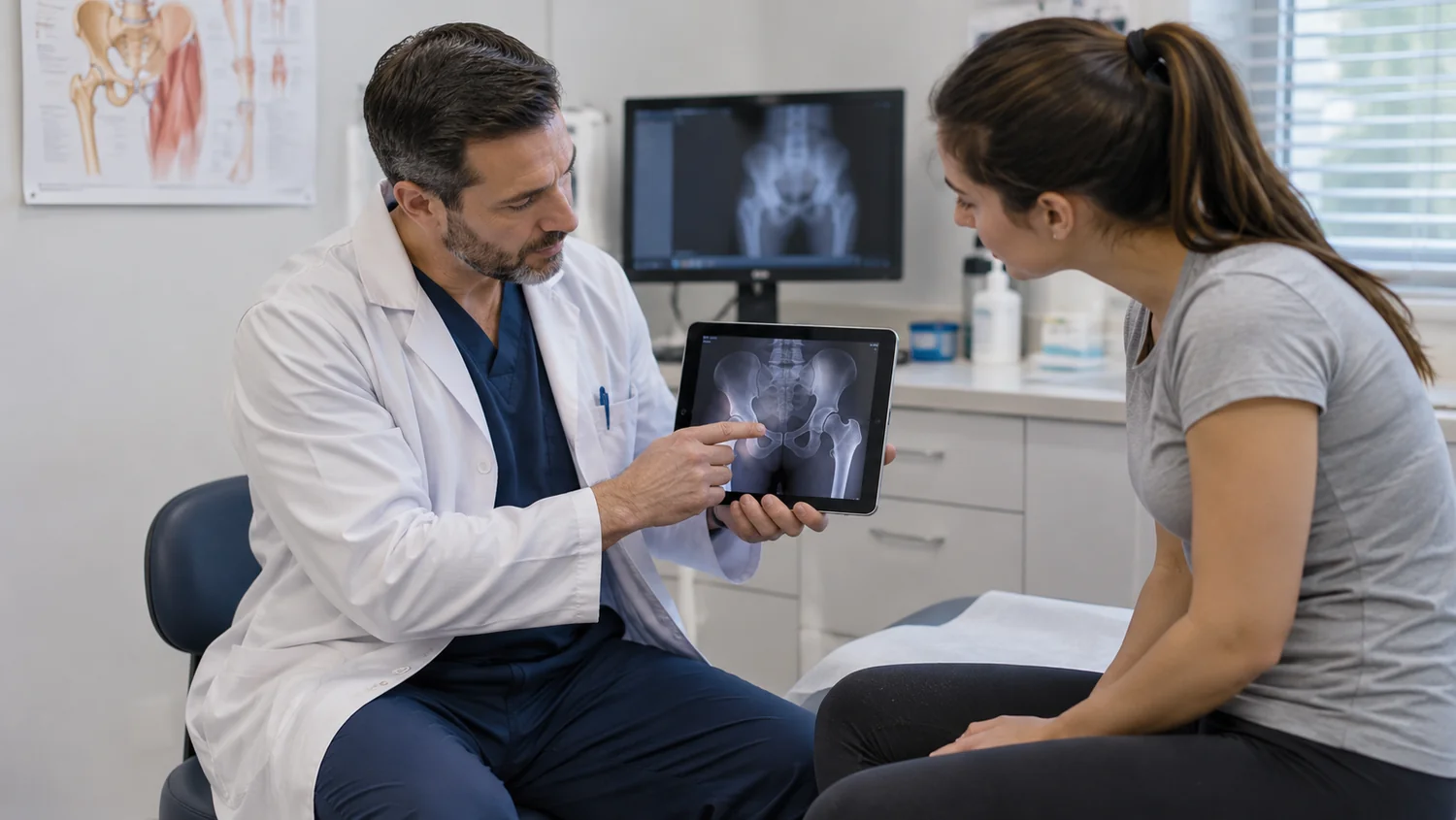
An orthopedic evaluation may include a physical examination and imaging tests to assess hip injuries after a car accident. Source: AI-generated image
Depending on the suspected injury, imaging tests may include:
- X-rays: Help identify most fractures and dislocations.
- CT scans: Provide detailed images of complex bone injuries, particularly fractures involving the acetabulum (hip socket).
- MRI: Helps evaluate soft tissue injuries and detect certain fractures that may not be visible on X-rays.
The choice of imaging depends on the suspected injury. If X-rays show no obvious damage but a fracture is still suspected, the doctor may recommend further imaging.
How Is Hip Pain After a Car Accident Treated?
Treatment depends on the type and severity of the injury. After evaluating the patient's condition, the doctor determines whether nonsurgical care is appropriate or surgery is necessary. The main goals are to relieve pain, restore mobility, and reduce the risk of complications.
Nonsurgical Treatment and Rehabilitation
Soft tissue injuries and certain other hip conditions may be managed with conservative treatment rather than surgery. Depending on the diagnosis, treatment may include:
- Activity modification: Temporarily reducing physical activity or using walking aids as recommended by a doctor.
- Pain management: Prescribed medications and other appropriate methods to relieve symptoms.
- Physical therapy: Gradually restoring range of motion, muscle strength, and joint stability once serious injuries have been ruled out.
Rehabilitation plans are tailored to the type of injury, the patient's overall condition, and their progress during recovery.
When Is Surgery Needed?
Surgery may be necessary for certain fractures of the femur or acetabulum, complicated hip dislocations, and some injuries involving structures within the joint.
Depending on the injury, surgical treatment may involve stabilizing fractured bones, repairing damaged tissues, or restoring joint stability.
Not every hip dislocation requires surgery. In some cases, the joint can be repositioned without an operation. However, hip dislocation always requires urgent medical treatment, and reduction must be performed by a qualified medical professional.
How Long Does Hip Pain Last After a Car Accident?
Recovery time depends on the type and severity of the injury. Mild soft tissue injuries may gradually improve over several weeks, while fractures, dislocations, and significant joint injuries often require a longer recovery period.
Recovery also depends on factors such as age, overall health, underlying medical conditions, how soon treatment begins, and adherence to the rehabilitation plan.
If hip pain persists, worsens, or returns after a period of improvement, a reassessment can help determine whether recovery is progressing as expected or the treatment plan needs to be adjusted.
What Should You Do If Your Hip Hurts After a Car Accident?
If you experience hip pain after a car accident, it's important to take the symptoms seriously, even if the discomfort seems mild. Some injuries may not be immediately apparent.
- Check for emergency warning signs. Severe pain, visible deformity, or an inability to bear weight may indicate a serious injury. Seek emergency medical care if these symptoms occur.
- Get a medical evaluation. If there are no emergency warning signs, arrange an appointment with a healthcare professional to identify the possible cause of new or persistent hip pain.
- Avoid putting weight on the injured leg if a serious injury is suspected. Do not attempt to test the joint's stability or force painful movements.
- Avoid exercises and stretching until the injury has been assessed. Activities that increase pain may aggravate certain injuries.
- Follow your treatment plan and monitor symptoms. After evaluation, follow your doctor's recommendations and report any worsening pain, swelling, numbness, or changes in mobility.
Getting Medical Care for Hip Injuries After a Car Accident
If hip pain persists after a car accident or interferes with daily activities, an orthopedic evaluation can help identify the source of the pain and determine appropriate treatment options.
NEO Surgical Group evaluates accident-related orthopedic injuries and develops treatment recommendations based on each patient's condition.
If you suspect a fracture, dislocation, or another serious injury, seek immediate care at an emergency department.
Call Now (833) 863-6633FAQ
Yes. Sitting can increase discomfort from certain hip injuries, particularly when the joint remains bent for a prolonged period. Pain that worsens while sitting may also originate in the lower back. The pattern of symptoms can help guide an evaluation but does not confirm a specific diagnosis.
Yes. During a collision, the lap portion of a seat belt can place pressure on the pelvis and surrounding soft tissues. This may cause bruising or tenderness, although persistent or severe pain may indicate a more significant injury requiring medical assessment.
Yes. A collision may worsen symptoms associated with an existing hip condition, such as osteoarthritis or a previous injury. New or increased pain after an accident should be evaluated to distinguish an aggravation of an existing condition from a new injury.