
Sciatica After a Car Accident: Symptoms, Causes & Treatment

Sciatica refers to pain and other symptoms caused by irritation or compression of a nerve root that contributes to the sciatic nerve. The pain typically travels from the lower back or buttock down the leg and may be accompanied by numbness, tingling, or weakness.
After a car accident, sciatica may develop or worsen if an injury affects the nerve roots in the lower spine. However, radiating leg pain after a collision can have different causes, so a medical evaluation may be needed to determine the source of the symptoms.
Key Takeaways
- A car accident may cause or aggravate sciatica when an injury leads to irritation or compression of a nerve root in the lower spine.
- A common sign of sciatica is pain that radiates from the lower back or buttock down the leg, sometimes with numbness, tingling, or weakness.
- Sciatica symptoms may appear immediately after a collision or become noticeable later.
- Diagnosis may involve a physical and neurological examination and, when clinically appropriate, imaging or electrodiagnostic testing.
- Treatment depends on the underlying cause and may include conservative care, physical therapy, pain management, or, in certain cases, surgery.
Can a Car Accident Cause Sciatica?
A sudden impact, rapid acceleration, or abrupt deceleration during a collision can affect structures in the lumbar spine, leading to inflammation, swelling, or tissue injury. As a result, a nerve root connected to the sciatic nerve may become irritated or compressed.
However, not every case of sciatic nerve pain after a car accident means that the accident itself caused the symptoms. A person may have had pre-existing changes in the spine before the accident, and the collision may have aggravated them. That is why it is important to consider not only when the pain started, but also the nature of the injury, the symptoms, and the results of a medical evaluation.
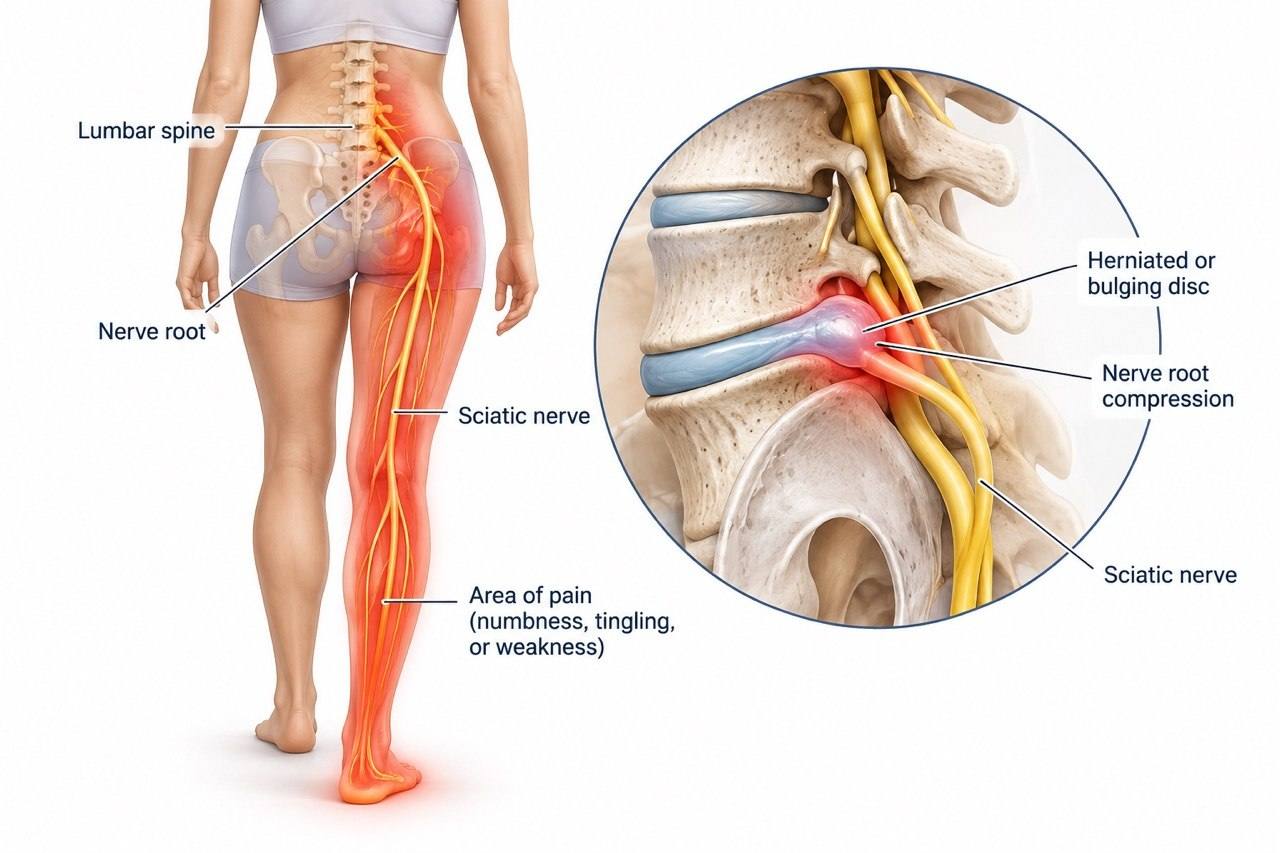
Sciatic nerve pathway and nerve root compression from a herniated or bulging disc. Source: AI-generated image for NEO Surgical Group
What Causes Sciatica After a Car Accident?
Herniated or Bulging Disc
One possible cause is a herniated or bulging disc in the lumbar spine. A damaged disc can irritate or compress a nerve root, causing pain that travels into the buttock and leg.
Inflammation and Swelling
After an injury, swelling around a nerve root may increase irritation and contribute to sciatic symptoms.
Direct Trauma to the Lower Back or Pelvis
Sciatica can also be associated with direct trauma to the lower back or pelvis. A strong impact to these areas can damage the surrounding tissues and structures located near the nerves. Depending on the nature of the injury, this may lead to sciatic symptoms.
Symptoms of Sciatica After a Car Accident
The main symptom of sciatica after a car accident is pain that travels from the lower back or buttock down the leg, usually on one side. Radiating leg pain may feel sharp, shooting, burning, or like an electric shock.
In addition to pain, you may experience numbness and tingling or weakness in the leg. For some people, symptoms become worse after prolonged sitting or certain movements, as well as when coughing or sneezing. However, symptoms can vary from person to person, so leg pain alone does not necessarily mean you have sciatica.
Experiencing radiating leg pain, numbness, or tingling after a car accident? Schedule a consultation with NEO Surgical Group.
Call Now (833) 863-6633Can Sciatica Symptoms Be Delayed After a Car Accident?
Symptoms of sciatica after a car accident may not appear immediately. After a collision, the body can respond to an injury with inflammation and swelling, while some injuries may become more noticeable over time. As a result, a person may feel relatively fine immediately after the accident and then develop pain, tingling, or other symptoms later.
Delayed symptoms do not necessarily mean they were caused by the accident. If radiating leg pain or other unusual sensations develop sometime after a collision and persist or become worse, it is worth seeing a doctor to determine the possible cause.
Sciatica vs. Regular Back Pain: What’s the Difference?
After a car accident, back pain does not always mean sciatica. One of the main differences is where the symptoms travel. With regular back pain, the pain usually stays in the lower back, while sciatica may travel from the lower back or buttock down the leg.
| Symptom / Feature | Regular Back Pain | Sciatica |
|---|---|---|
| Location | Usually felt in the lower back and may stay in that area | May start in the lower back or buttock and travel down the leg |
| Pain Pattern | More often localized pain, soreness, or stiffness | Often described as shooting, burning, or electric-like pain |
| Radiation | Usually does not travel far from the back | Characteristic radiating leg pain, usually affecting one side |
| Numbness / Tingling | Not typical symptoms | May accompany leg pain |
| Weakness | Usually not a main symptom | May occur when a nerve root is involved |
These differences can help distinguish the pattern of symptoms, but it is not always possible to determine their cause on your own. If back pain persists after an accident or symptoms begin to travel down the leg, a doctor can evaluate them and determine what type of testing may be needed.
When Is Sciatica After a Car Accident an Emergency?
In most cases, symptoms of sciatica do not require emergency medical care. However, certain signs may indicate serious nerve compression or another urgent neurological condition and require immediate medical evaluation.
Seek emergency medical care if you develop any of the following symptoms after a car accident:
- bowel or bladder dysfunction, including loss of bladder or bowel control;
- saddle-area numbness, including numbness in the groin, inner thighs, or buttocks;
- rapidly worsening or progressive leg weakness in one or both legs;
- significant or rapidly worsening neurological symptoms.
These symptoms are uncommon but should not be ignored. If you do not have any of these warning signs but your pain, numbness, tingling, or weakness persists, worsens, or interferes with your daily activities, you should see a doctor to determine the cause and identify whether further testing is needed.
How Is Sciatica Diagnosed After a Car Accident?
Diagnosing sciatica after a car accident involves more than determining whether the symptoms are consistent with sciatic pain. A doctor also needs to identify what may be irritating or compressing the nerve root and whether the symptoms may be related to the injury.
Physical and Neurological Examination
First, the doctor will ask about the car accident, when the symptoms began, and how they have changed over time. The examination may include an assessment of the location and pattern of pain, muscle strength, sensation, and reflexes. In some cases, a straight leg raise test may be used to assess possible irritation of the nerve structures in the lower back.
MRI and Other Imaging Tests
If the symptoms or examination findings suggest a possible injury to the structures of the spine, the doctor may recommend an MRI or another imaging study. An MRI can provide detailed images of the lumbar spine, discs, and surrounding soft tissues. However, imaging is not necessary for everyone with symptoms of sciatica, and the decision depends on the individual clinical situation.
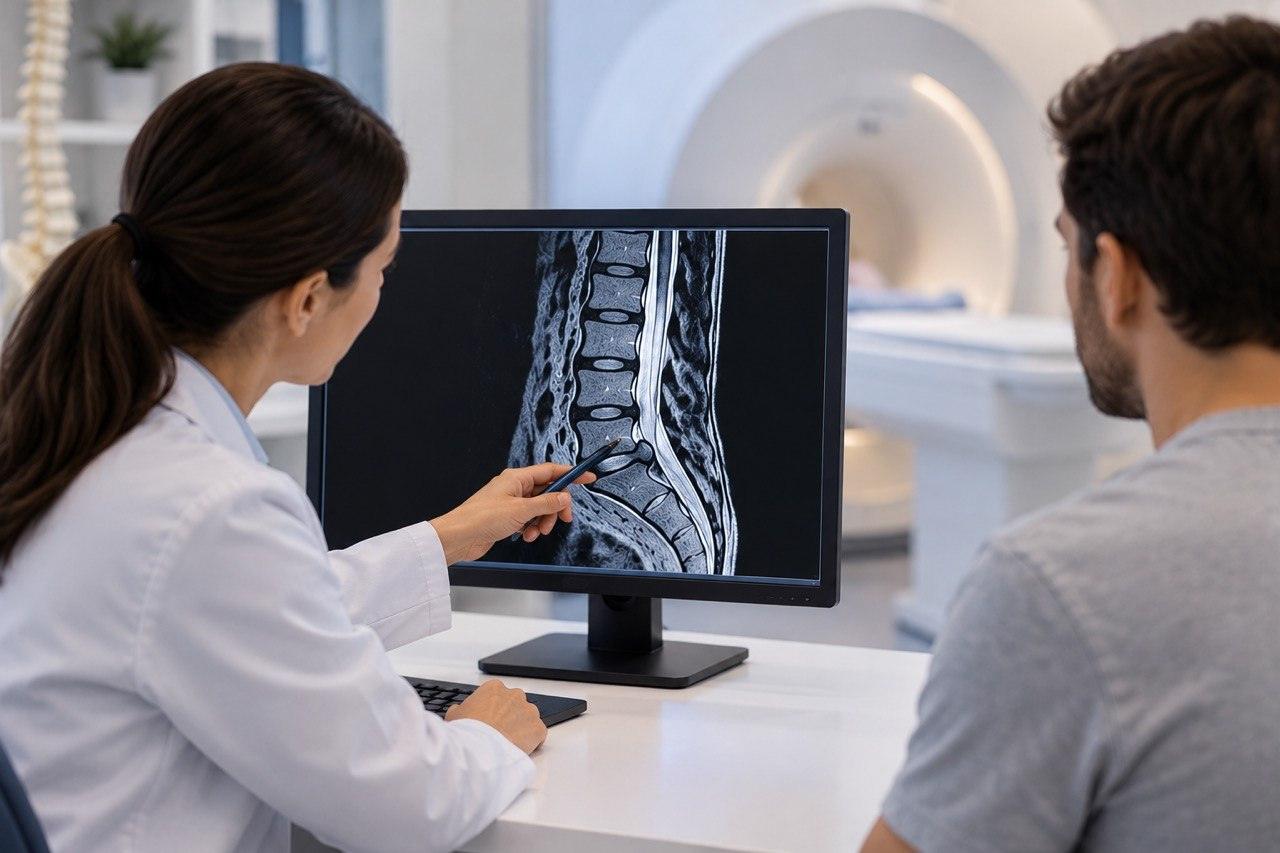
Lumbar spine MRI evaluation for possible nerve root compression. Source: AI-generated image for NEO Surgical Group
EMG and Nerve Conduction Studies
In some cases, a doctor may recommend electrodiagnostic testing, including EMG and nerve conduction studies. These tests help evaluate how the nerves and muscles are functioning and can be useful when it is necessary to clarify the source of neurological symptoms or distinguish between different possible causes.
A medical evaluation can help determine what may be causing your symptoms and whether additional testing is needed.
Call Now (833) 863-6633Treatment for Sciatica After a Car Accident
The appropriate treatment depends on the underlying cause, the severity of the symptoms, the results of the evaluation, and the patient’s overall health.
Conservative Treatment
In many cases, treatment begins with nonsurgical approaches. These may include modifying activities to avoid aggravating symptoms, medications to manage pain and inflammation, and other approaches that help maintain movement and daily function.
Physical Therapy
Physical therapy may be part of the recovery process after an injury. Exercises and other therapeutic techniques are tailored to the individual and may focus on improving mobility, strength, and function.
Pain Management and Injections
If pain persists or interferes with daily activities, a doctor may consider pain management and certain injections. Depending on the situation, injections may be used to reduce pain and inflammation or as part of the diagnostic process.
If an evaluation identifies a structural problem causing significant or progressive nerve compression, or if conservative treatment does not provide sufficient relief, surgery may be considered. Surgery is not needed for most people with sciatica and is generally considered only in specific circumstances. In such cases, a consultation with a neurosurgeon may be recommended to determine whether surgical treatment is appropriate.
Still experiencing sciatic pain after a car accident? Schedule a consultation with NEO Surgical Group to discuss your symptoms and appropriate next steps.
Call Now (833) 863-6633How Long Does Sciatica Last After a Car Accident?
Recovery time can vary significantly from person to person. It depends on the underlying cause, the severity of the injury, the degree of nerve irritation or compression, and how the body responds to treatment.
For some people, symptoms gradually improve as the injury heals, while more significant injuries may cause symptoms to persist longer and require additional evaluation or treatment. Therefore, it is not possible to predict an exact recovery time based on the presence of sciatica alone.
When Should You See a Doctor for Sciatica After a Car Accident?
You should see a doctor if radiating pain persists or worsens after a car accident, especially if it is accompanied by numbness, tingling, or weakness in the leg. Difficulty walking or sitting for extended periods, as well as symptoms that interfere with your normal daily activities, are also reasons to seek medical evaluation.
Even if the pain does not seem severe, a medical evaluation can help identify the possible cause and determine whether additional testing or treatment may be needed.
FAQ
Even a relatively minor collision can cause an injury or aggravate an existing condition. However, the severity of a crash alone does not determine whether someone will develop sciatica. The type of impact, the condition of the spine, and individual factors can all play a role.
Sciatica more often affects one leg, but symptoms can occur on both sides. Bilateral symptoms should be evaluated carefully, particularly if they are accompanied by significant or worsening leg weakness.
No. Although lower back pain can occur with sciatica, some people experience more noticeable pain in the buttock or leg. In some cases, leg symptoms may be more prominent than discomfort in the lower back.
Depending on which nerve root is affected, sciatica symptoms can travel down the leg and into the foot. However, foot pain after a car accident can have other causes, so its source should be evaluated rather than assumed to be sciatica.
Yes. Numbness and tingling can occur with sciatica, but they are not present in every case. Some people may primarily experience radiating pain from the lower back or buttock into the leg.
Yes. Symptoms can return after a period of improvement. A recurrence does not necessarily mean there is a new injury, but persistent or worsening symptoms should be discussed with a doctor.
Bibliography
- https://www.mayoclinic.org/diseases-conditions/sciatica/symptoms-causes/syc-20377435
- https://my.clevelandclinic.org/health/diseases/12792-sciatica
- https://www.mayoclinic.org/diseases-conditions/sciatica/diagnosis-treatment/drc-20377441
- https://www.ncbi.nlm.nih.gov/books/NBK562933/
- https://pubmed.ncbi.nlm.nih.gov/19260059/
- https://pubmed.ncbi.nlm.nih.gov/34714690/
- https://pmc.ncbi.nlm.nih.gov/articles/PMC5765938/
- https://pmc.ncbi.nlm.nih.gov/articles/PMC6858271/