
Neck Pain After a Car Accident: When It's Serious and How It's Treated

Neck pain after a car accident is one of the most common reasons people seek medical care following a motor vehicle accident. It may begin immediately after the collision or develop hours or even days later, even if you initially feel uninjured.
Neck pain can result from relatively minor soft tissue injuries or from more serious damage involving the spinal discs, facet joints, or nerves. In this article, you'll learn what causes neck pain after a car accident, which symptoms may indicate a more serious injury, how neck injuries are diagnosed, what treatment options are available, and when it's important to see a specialist.
Why Does Neck Pain Happen After a Car Accident?
Neck pain after a car accident can occur even after a low-impact collision. During the crash, the head is suddenly forced forward, backward, or sideways, placing significant stress on the cervical spine. This rapid motion can injure the muscles, ligaments, intervertebral discs, facet joints, and other structures in the neck.
In some cases, inflammation and muscle spasms develop gradually. As a result, delayed neck pain after a car accident may not appear until several hours or even days after the collision. That's why feeling fine immediately after an accident does not necessarily mean you were not injured.
Even if your vehicle sustained only minor damage, you can still suffer a neck injury. The amount of damage to a vehicle does not always reflect the amount of force transmitted to the cervical spine during a collision.
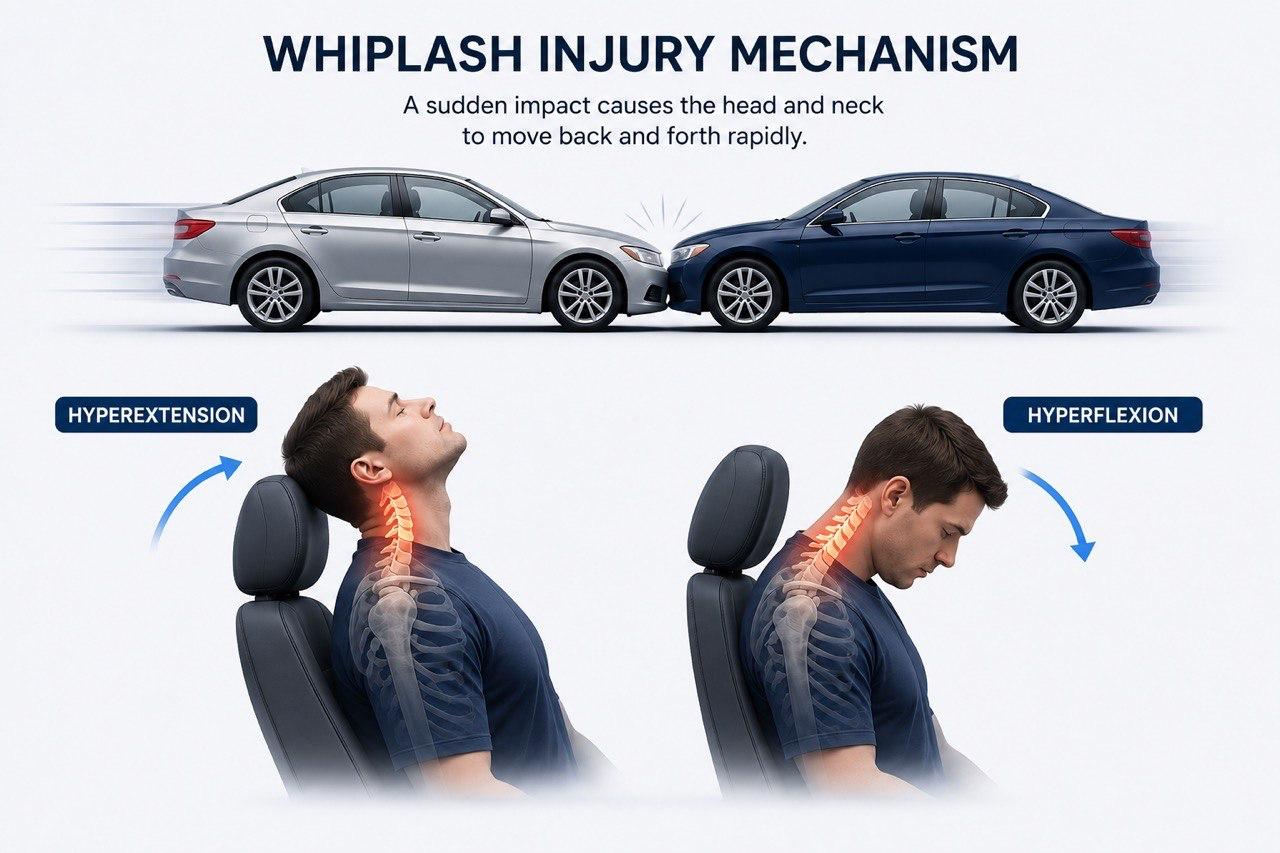
Whiplash occurs when the head is suddenly forced backward and then forward during a collision.
(AI generated)
Common Causes of Neck Pain After a Car Accident
Several types of injuries can cause neck pain after a car accident. Some affect only the soft tissues, while others may involve the intervertebral discs, facet joints, nerves, or bones of the cervical spine.
| Injury | What It Is | Common Symptoms |
|---|---|---|
| Whiplash | A neck injury caused by the head being suddenly forced backward and forward, stretching the muscles, ligaments, and other soft tissues of the neck. | Neck pain, stiffness, headaches, reduced range of motion, shoulder pain. |
| Muscle Strain | Stretching or partial tearing of the muscles or tendons that support the neck. | Localized neck pain, muscle tightness, tenderness, pain that worsens with movement. |
| Herniated Disc | Damage to an intervertebral disc that causes it to press on nearby nerve roots. | Neck pain, pain radiating into the shoulder or arm, numbness, tingling, muscle weakness. |
| Facet Joint Injury | Damage to the small joints that connect the vertebrae and allow the neck to move smoothly. | Neck pain and stiffness, pain that worsens when turning the head or looking upward. |
| Pinched Nerve | Compression or irritation of a nerve root in the cervical spine, often caused by inflammation or a herniated disc. | Sharp or burning pain, numbness, tingling, weakness in the arm or hand. |
| Cervical Fracture | A break in one or more bones of the cervical spine. This is a medical emergency that requires immediate evaluation and treatment. | Severe neck pain, inability to move the neck, numbness, weakness, or paralysis. |
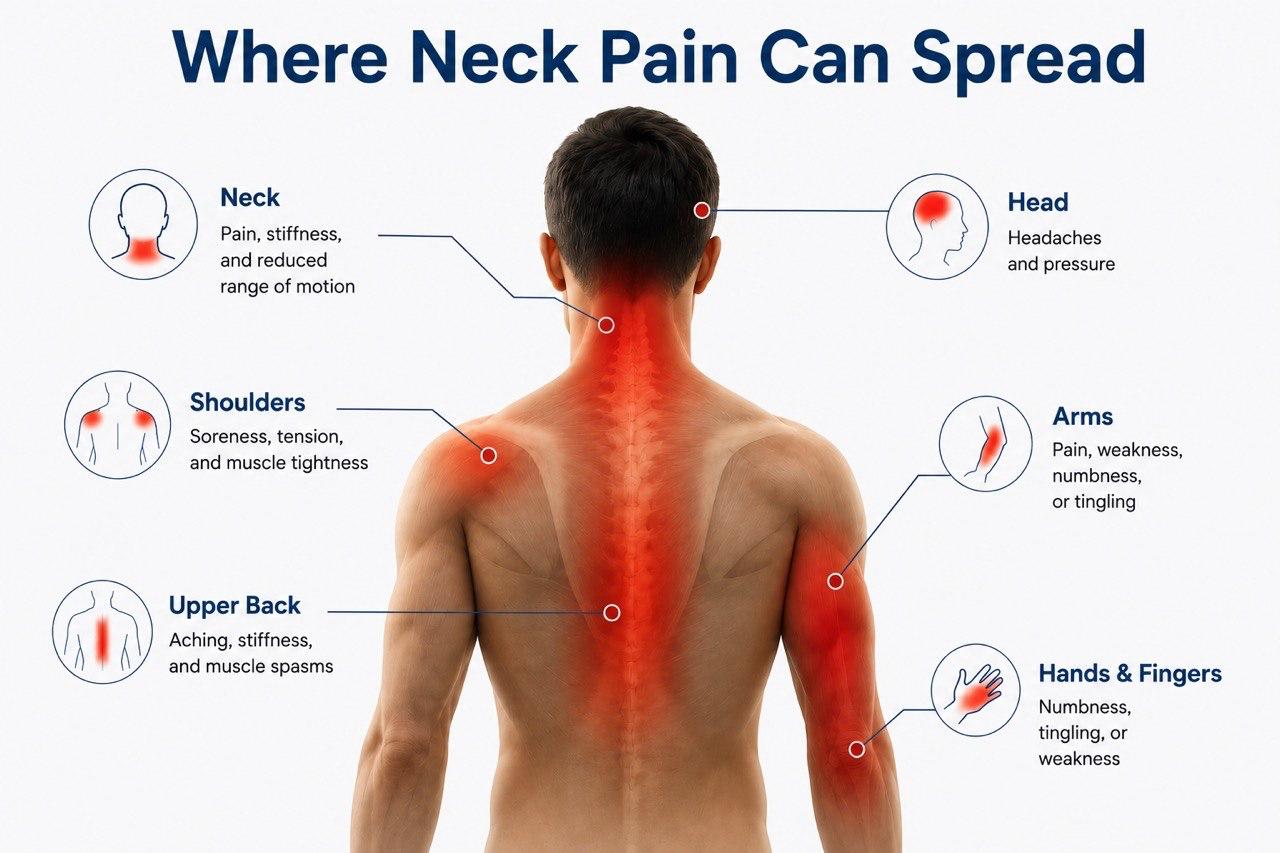
Neck pain after a car accident may spread to the shoulders, upper back, arms, hands, and head.
(AI generated)
Not every case of back and neck pain after a car accident is caused by a serious injury. However, if your pain worsens, lasts for several days, or is accompanied by numbness, tingling, weakness in your arms, or other neurological symptoms, it's important to seek medical evaluation as soon as possible.
Because many neck injuries can cause similar symptoms, it's impossible to determine the exact cause based on symptoms alone. A thorough medical evaluation is needed to identify the underlying injury. An accurate diagnosis helps guide the most effective treatment and reduces the risk of long-term complications.
📞 Get Evaluated After a Car AccidentCommon Symptoms of a Neck Injury
The symptoms of a neck injury after a car accident can vary depending on the type and severity of the injury. Some people experience pain immediately after the collision, while others do not notice symptoms until several hours or even days later.
Common symptoms include:
- Neck pain — persistent or worsening.
- Neck stiffness — stiffness and difficulty turning or bending the head.
- Headaches — headaches that often begin at the base of the skull and may spread to the temples or forehead.
- Reduced range of motion — difficulty moving the neck or discomfort when turning the head.
- Shoulder pain — pain that radiates into the shoulders or upper back.
- Numbness or tingling — numbness or a tingling sensation in the shoulders, arms, or hands, which may indicate nerve irritation or compression.
- Muscle weakness — weakness in the arm or hand, including difficulty gripping or holding objects.
- Dizziness — a feeling of dizziness, lightheadedness, or unsteadiness.
- Blurred vision — temporary blurred vision that may occur with certain types of neck injuries.
It's important to remember that delayed neck pain after a car accident is common. Following a collision, your body releases adrenaline and other stress hormones that may temporarily mask pain. As these hormones wear off and inflammation develops, symptoms often become more noticeable.
In many cases, symptoms do not appear until 12 to 72 hours after the accident. That's why the absence of pain immediately after a collision does not necessarily mean you weren't injured.
Neck injuries after a collision are often accompanied by pain in other parts of the spine. If you're experiencing pain beyond your neck, read our guide on Back Pain After a Car Accident to learn about common causes, delayed symptoms, and when back pain may indicate a more serious spinal injury.
When Is Neck Pain a Sign of a Serious Injury?
Although most cases of neck pain after a car accident involve soft tissue injuries, some symptoms may indicate a more serious injury to the cervical spine, spinal cord, or nerves. Severe neck pain — especially if it does not improve with rest or is accompanied by neurological symptoms — should never be ignored.
The following symptoms may be signs of a serious neck or nervous system injury and require immediate medical attention:
- Numbness or tingling in the arms, hands, or fingers.
- Weakness in one or both arms.
- Loss of sensation in the arms, legs, or other parts of the body.
- Difficulty walking, poor coordination, or problems with balance.
- Loss of bladder or bowel control, which may indicate a serious spinal cord injury.
- Severe headache, especially if it began immediately after the accident or continues to worsen.
- Dizziness, confusion, or loss of consciousness, which may also be signs of traumatic brain injury.
- Vision changes, including blurred or double vision.
- Severe pain with any attempt to move the neck.
Some patients develop more than one injury after a collision. If your neck pain is accompanied by chest discomfort, especially after seat belt or airbag impact, our article on Chest Pain After a Car Accident explains the most common causes, warning signs, and when you should seek medical care.
How Neck Injuries Are Diagnosed
Diagnosis begins with a thorough medical evaluation. Your doctor will ask how the accident happened, when your symptoms began, and what makes the pain better or worse. They will also examine your neck for tenderness, evaluate your range of motion, muscle strength, sensation, and reflexes. If there are signs of nerve involvement, a neurological examination may also be performed.
If you hit your head during the accident or experience headaches, dizziness, confusion, memory problems, or blurred vision, your provider may also evaluate you for a concussion or other traumatic brain injury. Learn more about Concussion Symptoms After a Car Accident and when neurological symptoms require immediate medical attention.
Depending on the findings and the suspected injury, your doctor may recommend additional imaging studies or diagnostic tests.
| Diagnostic Test | What It Shows | When It's Commonly Used |
|---|---|---|
| X-ray | Shows the alignment of the cervical spine and helps identify fractures, dislocations, or signs of spinal instability | Commonly used when a bone injury is suspected after a car accident. |
| CT Scan | Provides highly detailed images of the bones and can detect fractures that may not be visible on an X-ray. | Often recommended when a complex fracture is suspected or when X-ray findings are inconclusive. |
| MRI | Provides detailed images of the soft tissues, including the intervertebral discs, ligaments, muscles, spinal cord, and nerve roots. | Recommended for persistent pain, neurological symptoms, or suspected soft tissue, spinal cord, or nerve injuries. |
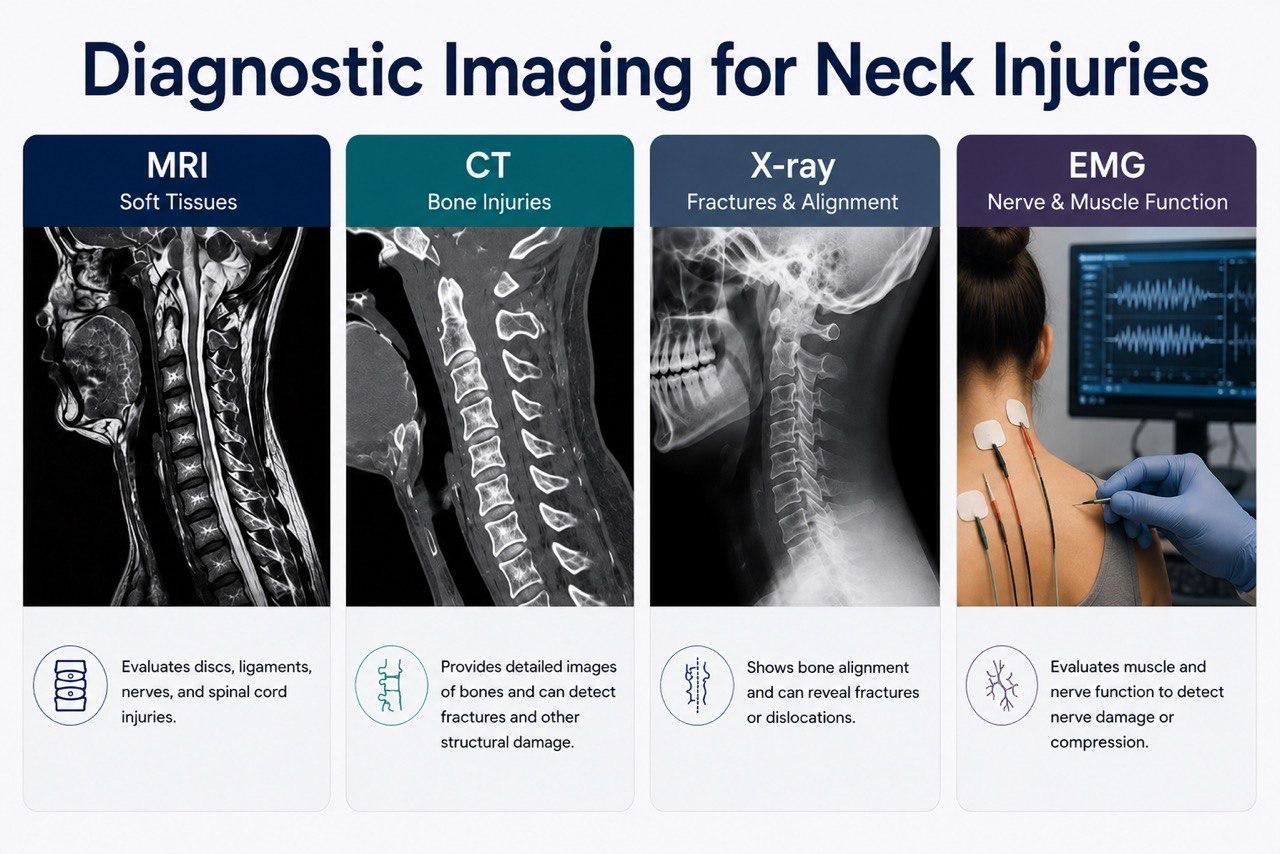
Different imaging tests help evaluate specific types of neck injuries after a car accident.
(AI generated)
Not every patient needs every imaging or diagnostic test after a car accident. The choice depends on the type of injury, physical examination findings, and your symptoms. If numbness, tingling, or muscle weakness persists, your doctor may recommend EMG (electromyography) to evaluate nerve function and detect signs of nerve damage or compression.
In many cases, evaluation begins with the most appropriate study, and additional tests are ordered only if needed.
📞 Schedule an EvaluationTreatment for Neck Pain After a Car Accident
Treatment for neck pain after a car accident depends on the underlying injury, the severity of your symptoms, and how much the injury affects your daily activities. In most cases, treatment begins with conservative approaches, while more advanced or invasive options are considered only if symptoms persist or significant structural damage is present.
1. Conservative Treatment
Most patients begin with conservative treatment aimed at relieving pain, reducing inflammation, and restoring normal neck function. Depending on the nature of the injury, your doctor may recommend medications, a gradual return to normal activities, and temporarily avoiding movements or activities that worsen your symptoms. Prolonged immobilization of the neck is generally not recommended, as it may delay recovery.
2. Physical Therapy
Once the acute pain begins to improve, many patients benefit from physical therapy. A personalized rehabilitation program can help restore neck mobility, strengthen the supporting muscles, improve posture, and reduce the risk of chronic pain. Depending on your condition, treatment may also include manual therapy, stretching exercises, and movement training to improve flexibility and restore normal movement patterns.
3. Pain Management
If pain continues despite conservative treatment and physical therapy, your doctor may recommend additional pain management options. The goal is to reduce pain, improve your ability to perform daily activities, and support your recovery so you can continue rehabilitation more comfortably.
4. Diagnostic and Therapeutic Injections
In some cases, your doctor may recommend diagnostic or therapeutic injections. These procedures can help identify the source of pain or provide temporary relief by reducing inflammation and pain. The decision to perform an injection is based on your symptoms, physical examination findings, and the results of imaging studies.
5. Surgery
Only a small percentage of patients require surgery after a neck injury from a car accident. Referral to a specialist in neurosurgery and orthopedics may be recommended if there is spinal instability, certain types of fractures, significant compression of the spinal cord or nerve roots, or if symptoms continue to worsen despite appropriate conservative treatment.
Most people recover from neck injuries after a car accident without surgery. Early evaluation and timely treatment can help relieve pain, restore neck function, and reduce the risk of long-term complications.
How Long Does Neck Pain Last After a Car Accident?
Recovery from neck pain after a car accident varies depending on the type and severity of the injury, as well as your overall health. While some people notice significant improvement within a few days, others may need several months to recover fully.
In most cases, mild neck injuries improve within a few days to a few weeks. More serious injuries, including herniated discs, fractures, or injuries involving the spinal cord or nerves, may require several months of treatment and rehabilitation.
What Happens If Neck Pain Is Left Untreated?
Some neck injuries do not heal on their own. Without appropriate evaluation and treatment, they can lead to chronic pain, reduced mobility, and other long-term complications.
Persistent neck pain and stiffness can make everyday activities more difficult, including driving, working at a computer, exercising, and getting a good night's sleep.
In some cases, ongoing symptoms are caused by more serious conditions, such as cervical radiculopathy or a herniated disc. Without proper treatment, these conditions may result in persistent pain, numbness, tingling, or weakness in the arm. Some people also develop chronic headaches related to injuries of the cervical spine.
Seeking medical care can help identify the underlying cause of your symptoms, begin appropriate treatment, and reduce the risk of long-term complications. If your neck pain after a car accident does not improve or begins to interfere with your daily activities, schedule an evaluation with your doctor.
When Should You See a Doctor?
Even if you don't have severe symptoms immediately after a car accident, a medical evaluation can help rule out injuries that may not become apparent right away. Some soft tissue injuries, herniated discs, and nerve injuries may not cause noticeable symptoms until hours or even days after the collision.
If your neck pain lasts longer than 24 to 48 hours, gradually worsens, or is accompanied by numbness, tingling, weakness, or reduced range of motion, it's important to be evaluated by a healthcare provider.
Early diagnosis can identify the underlying cause of your symptoms, guide the most appropriate treatment, and reduce the risk of long-term pain or loss of neck function.
FAQ
Mild soft tissue injuries often improve on their own within a few days to a few weeks. However, if your pain persists, worsens, or begins to limit your ability to move your neck or perform daily activities, you should see a doctor to rule out a more serious injury.
Even low-speed collisions can cause injuries to the muscles, ligaments, intervertebral discs, or facet joints of the neck. The severity of a neck injury does not always correspond to the amount of damage to the vehicle.
It's common for neck pain to become more noticeable during the first few days after a car accident as inflammation develops and muscle spasms occur. However, if the pain becomes severe or is accompanied by new symptoms such as numbness, weakness, or dizziness, you should seek medical evaluation.
During the first 24 to 48 hours, ice is generally recommended to help reduce pain and inflammation. After that, some people find that heat helps relax tight muscles and improve comfort. The most appropriate option depends on the type of injury and your doctor's recommendations.
You should return to physical activity gradually. Strenuous exercise should generally be avoided until you've been evaluated by a doctor, especially if your pain is severe or accompanied by numbness, tingling, weakness, or other neurological symptoms. After your evaluation, your doctor may recommend safe exercises or a personalized physical therapy program.
In most cases, no. Most neck injuries after a car accident can be successfully treated with conservative approaches, including medications and physical therapy. Surgery is typically considered only for certain injuries, such as spinal instability, specific types of fractures, or significant compression of the spinal cord or nerve roots.
Neo Surgical Group provides diagnosis and treatment for neck injuries after car accidents at multiple locations throughout Florida. Whether your symptoms started immediately or developed days later, our specialists are here to help you begin your recovery.
Don't ignore neck pain after a car accident. Our specialists can identify the cause of your symptoms and create a personalized treatment plan.
📞 Call us: (833) 863-6633
📞 Schedule Your EvaluationBibliography
- https://my.clevelandclinic.org/health/diseases/11982-whiplash
- https://my.clevelandclinic.org/services/cervical-neck-pain-treatment
- https://www.mayoclinic.org/diseases-conditions/whiplash/symptoms-causes/syc-20378921
- https://www.mayoclinic.org/diseases-conditions/whiplash/diagnosis-treatment/drc-20378926
- https://www.aans.org/patients/conditions-treatments/neck-pain/
- https://www.nhs.uk/conditions/whiplash/
- https://rheumatology.org/neck-pain