
Car Accident Injuries: Most Common Types
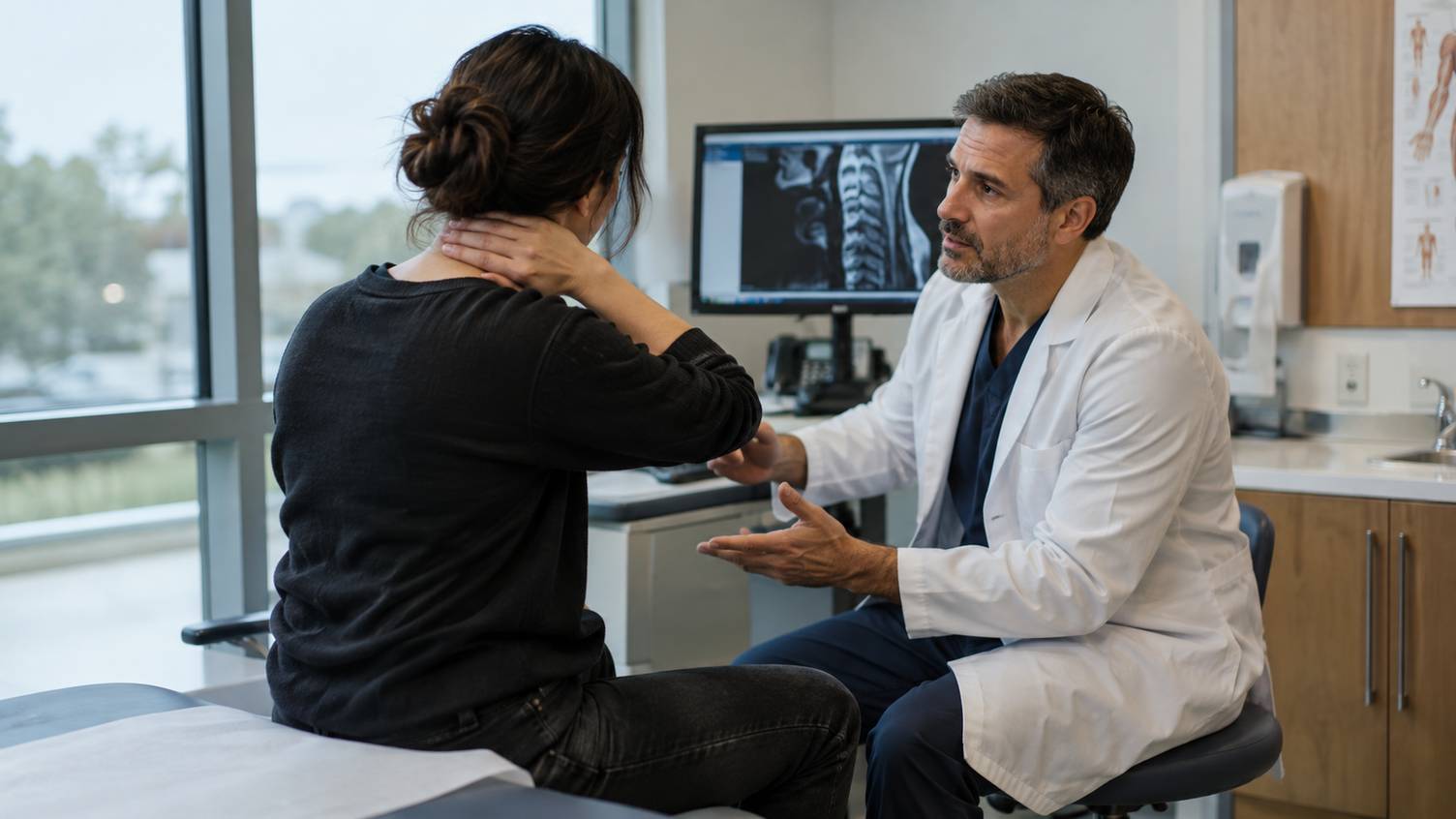
Depending on the direction and force of impact, car accident injuries can affect the muscles and ligaments, joints, spine, nerves, head, chest, or bones. Some injuries cause immediate pain, while others may become noticeable hours or days later.
Symptoms do not always indicate how serious an injury is. Pain, stiffness, numbness, weakness, dizziness, or limited mobility can have different causes, so persistent, worsening, or significant symptoms should be medically evaluated.
Key Takeaways
- Different injuries can cause similar symptoms, so pain or other symptoms alone may not identify the underlying injury.
- New or worsening symptoms can develop after the initial impact, even when a person feels relatively well immediately after a crash.
- Diagnostic testing is selected based on symptoms, examination findings, and the suspected injury; not everyone needs an X-ray, CT scan, MRI, or other test.
- Many musculoskeletal injuries can be treated without surgery, while more serious structural or neurological injuries may require specialized care.
- Recovery varies depending on the injury, its severity, nerve involvement, treatment, and individual factors.
What Are the Most Common Car Accident Injuries?
There is no single pattern of injury after a crash. A rear-end collision may affect the body differently from a side-impact or head-on collision, and even people in the same vehicle can experience different injuries.
Some of the most common car accident injuries involve the musculoskeletal and nervous systems, although head, chest, and internal injuries can also occur.
Whiplash
Whiplash is a neck injury associated with a rapid back-and-forth movement of the head and neck. It is commonly associated with rear-end collisions, although it can occur in other types of crashes as well.
Symptoms can include neck pain and stiffness, reduced range of motion, headaches, and tenderness or pain around the shoulders and upper back. Some people also experience dizziness, numbness, or tingling in the arms. These symptoms may not always appear immediately after the collision.
Learn more about whiplash and how its symptoms can develop.
Neck Injuries
Not every neck injury after a car accident is whiplash. A collision can also affect the muscles, ligaments, joints, and other structures of the cervical spine.
Possible symptoms include localized neck pain, stiffness, tenderness, muscle spasms, or difficulty turning or bending the neck. If nerve structures are affected, symptoms may extend into the shoulder, arm, or hand.
Because several different injuries can produce similar symptoms, neck pain alone cannot identify which structure has been injured. Our guide to neck pain after a collision explains other possible causes and symptoms in more detail.
Back and Spinal Injuries
Sudden acceleration, deceleration, compression, or twisting during a collision can place stress on the back and spine. Injuries may range from muscle or ligament strains to more significant injuries involving vertebrae or other spinal structures.
Back pain may be localized to one area or occur with stiffness and reduced mobility. More serious spinal injuries can affect the spinal cord or nerve structures and may cause neurological symptoms. If back pain develops after a crash, this guide covers common causes and signs to watch for.
Herniated and Bulging Discs
Intervertebral discs sit between the vertebrae and help absorb stress while allowing the spine to move. The forces of a collision can place substantial stress on these structures.
A disc injury may involve a bulging or herniated disc. When a disc irritates or compresses a nearby nerve, symptoms can include radiating pain, numbness, tingling, or muscle weakness in an arm or leg.
However, disc changes can also exist without symptoms. Finding a disc abnormality on imaging does not, by itself, establish that it was caused by a particular accident.
Read also: Herniated or Bulging Disc After a Car Accident
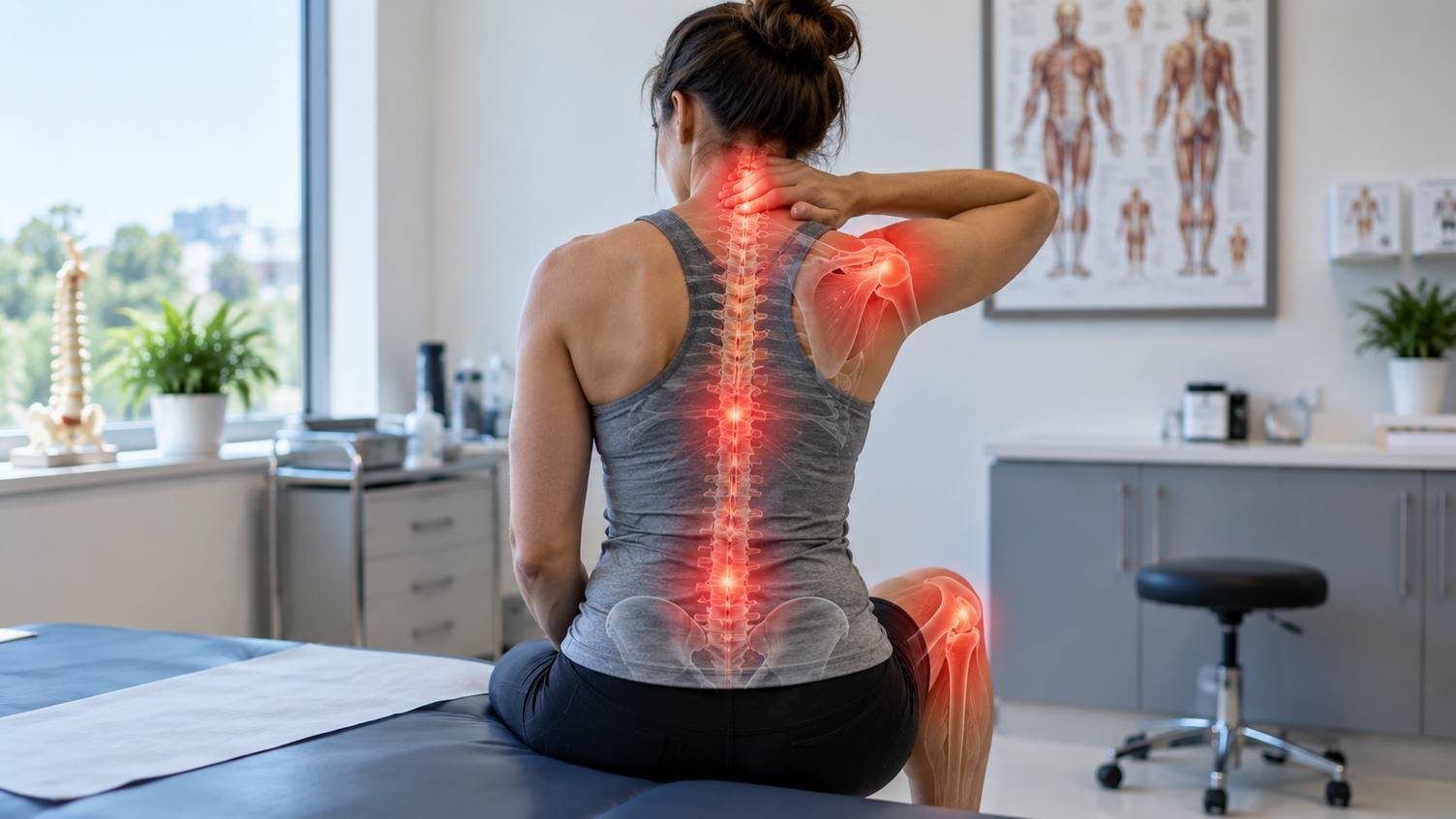
Car accidents can affect multiple areas of the musculoskeletal system, including the neck, spine, shoulders, and knees. Source: AI-generated.
Head Injuries and Concussions
A concussion is a type of traumatic brain injury that can occur when a collision causes the brain to move rapidly within the skull. A direct blow to the head is not always necessary.
Possible symptoms include headache, dizziness, nausea, problems with balance, sensitivity to light or noise, difficulty concentrating, memory problems, or changes in sleep. Symptoms can vary considerably from person to person. Read more about recognizing concussion symptoms after a car accident.
Shoulder Injuries
The shoulder can be injured through direct impact, sudden restraint by a seat belt, or forceful movement of the arm during a collision.
Possible injuries include muscle and tendon strains, ligament sprains, rotator cuff injuries, joint injuries, and fractures. Symptoms may include pain when moving or lifting the arm, weakness, swelling, tenderness, or reduced range of motion.
Because shoulder pain can originate from the shoulder itself or sometimes from the neck and surrounding nerves, determining the source may require a medical evaluation. This article explains common causes of post-accident shoulder pain in more detail.
Knee Injuries
During a crash, a knee may strike the dashboard, steering column, door, or another part of the vehicle. The joint may also be injured by sudden twisting or abnormal movement.
Possible knee injuries include sprains, ligament or meniscus injuries, bruising, and fractures. Depending on the structure involved, symptoms may include pain, swelling, stiffness, instability, difficulty bearing weight, or limited movement. Learn what may be causing knee pain after a collision and which symptoms may warrant further evaluation.
Nerve Damage
Nerves may be compressed, stretched, irritated, or injured during a car accident. Nerve symptoms can also develop when another injury, such as a disc problem, affects a nearby nerve root.
Possible symptoms include numbness, tingling, burning or shooting pain, unusual sensations, and muscle weakness. The location of these symptoms can provide useful information about which nerve structures may be involved, but symptoms alone are not enough to determine the exact cause. We explain how nerve-related symptoms can develop after a crash in a separate guide.
Chest and Rib Injuries
The chest can be exposed to substantial force from a seat belt, airbag, steering wheel, or another part of the vehicle.
This can result in bruising, muscle injuries, or rib injuries and may cause tenderness or pain that becomes more noticeable with movement or deep breathing. Chest pain after a collision can also have causes that require urgent evaluation, particularly when it is severe or accompanied by difficulty breathing. Our guide to chest pain after a car accident covers possible causes in more detail.
Fractures and Broken Bones
The forces involved in a collision can cause fractures in many areas of the body, including the arms, legs, ribs, hands, feet, pelvis, or spine.
Some fractures cause immediate and severe pain, swelling, deformity, or inability to use the injured area normally. Others may be less obvious initially. Imaging is often used when a fracture is suspected.
Soft Tissue Injuries
Soft tissue injuries affect muscles, tendons, ligaments, and related tissues. Common examples include strains, sprains, and bruising.
These injuries may cause soreness, swelling, stiffness, tenderness, or limited movement. Because soft tissue injuries do not always produce visible external signs, a person can have significant discomfort without an obvious wound or deformity.
The term is broad and can overlap with injuries in specific areas such as the neck, back, shoulder, or knee. The exact diagnosis depends on which tissues are affected.
Internal Injuries
A strong impact can also injure internal organs or cause internal bleeding. Unlike a visible cut or fracture, an internal injury may not always be apparent immediately after a crash.
Severe or increasing abdominal pain, abdominal swelling, fainting, unusual weakness, breathing problems, or other significant symptoms after trauma require prompt medical attention.
If pain, limited mobility, numbness, tingling, weakness, or other symptoms continue after a car accident, schedule a consultation with NEO Surgical Group. A doctor can evaluate your condition and determine whether additional testing or treatment may be appropriate.
Call Now (833) 863-6633Why Can Car Accident Injury Symptoms Be Delayed?
Not every injury becomes obvious immediately after a collision. Some symptoms may develop gradually as inflammation, swelling, muscle stiffness, or tissue irritation becomes more noticeable.
The body’s immediate stress response can also affect how pain and other sensations are perceived shortly after an accident. In other cases, a person may initially notice only mild discomfort that becomes more apparent when normal activity resumes.
Delayed symptoms can include increasing neck or back pain, stiffness, headaches, numbness, tingling, weakness, or discomfort with movement.
A delay does not automatically mean that a symptom is related to the accident. New or worsening symptoms should be medically evaluated so their cause can be determined rather than assumed.
What Symptoms After a Car Accident Require Immediate Medical Attention?
Some symptoms after a car accident can indicate a potentially serious injury and require urgent medical attention.
Seek emergency care for symptoms such as:
- loss of consciousness or difficulty staying awake;
- confusion, seizures, repeated vomiting, or rapidly worsening neurological symptoms;
- sudden or significant weakness or loss of sensation;
- difficulty walking or loss of coordination;
- loss of bladder or bowel control;
- severe or worsening chest pain or difficulty breathing;
- severe or increasing abdominal pain;
- significant uncontrolled bleeding;
- obvious deformity or signs of a severe fracture.
After a head injury, worsening symptoms such as repeated vomiting, seizures, or a severe or worsening headache may also require urgent evaluation.
Emergency symptoms should be addressed promptly rather than waiting for a routine appointment.
How Are Car Accident Injuries Diagnosed?
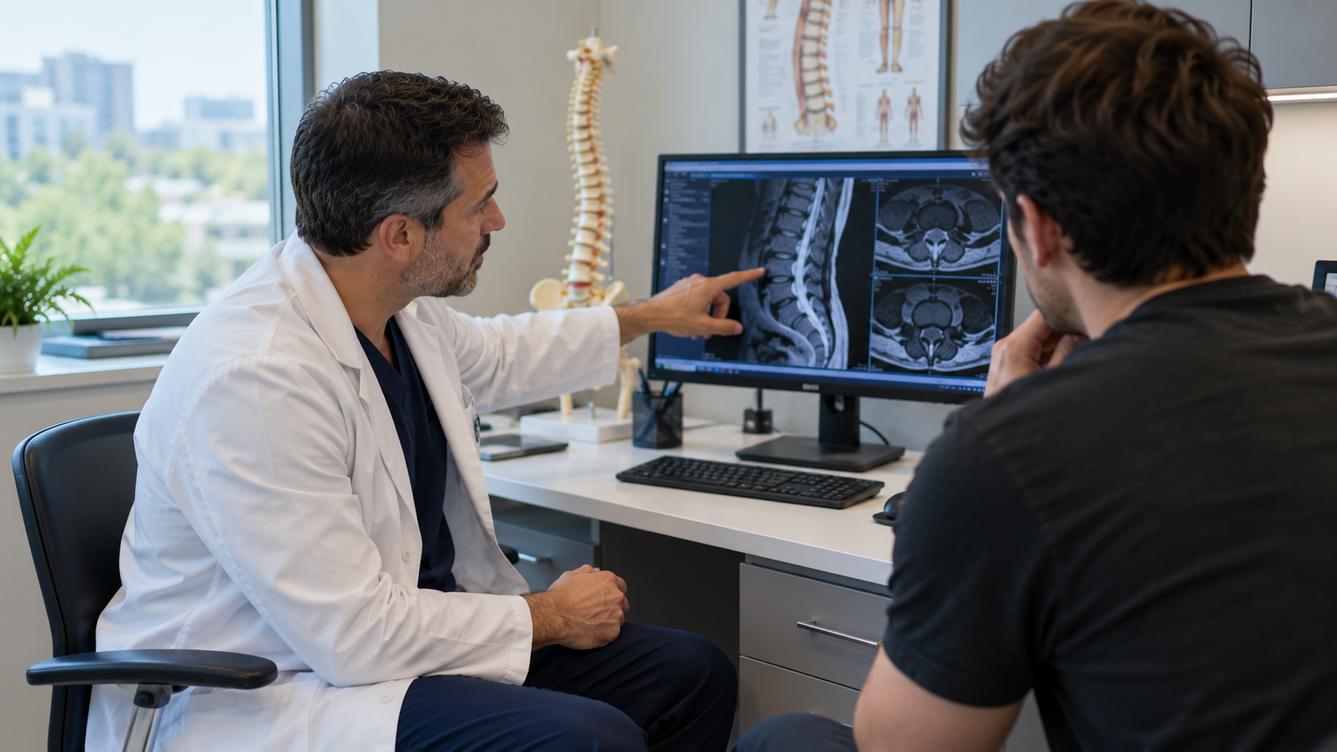
Diagnostic imaging may be used when symptoms and examination findings indicate that additional evaluation is needed. Source: AI-generated.
The diagnostic process depends on the symptoms, the area of the body involved, the circumstances of the collision, and what the doctor finds during the examination. There is no single test that is appropriate for every car accident injury.
Physical and Neurological Examination
Evaluation usually begins with a medical history and physical examination. A doctor may ask how the collision occurred, when symptoms started, whether they have changed over time, and whether the patient had previous problems involving the same area.
The physical examination may assess tenderness, swelling, range of motion, joint stability, strength, and the ability to perform certain movements.
When symptoms suggest possible nerve or spinal involvement, a neurological examination may also assess reflexes, sensation, muscle strength, balance, or coordination.
X-Rays, CT Scans, and MRI
Imaging may be ordered when the examination and symptoms indicate that additional information is needed. The type of imaging depends on the suspected injury.
- X-rays are useful for evaluating many bone injuries, including fractures and changes in alignment.
- CT scans provide detailed cross-sectional images and may be used to evaluate certain traumatic bone injuries and, when clinically indicated, head or internal injuries.
- MRI provides detailed images of soft tissues and can be useful for evaluating structures such as discs, ligaments, the spinal cord, and nerve structures.
Not every patient needs imaging, and not every type of scan is appropriate for every injury.
Additional Diagnostic Tests
Additional testing may be considered when the initial evaluation does not fully explain the symptoms or when a particular type of injury is suspected.
For neurological symptoms such as persistent numbness, tingling, or weakness, electrodiagnostic testing such as electromyography (EMG) and nerve conduction studies may sometimes be used to evaluate nerve and muscle function.
Other tests may be appropriate for specific injuries or body systems. They are selected according to the clinical situation rather than routinely performed after every accident.
How Are Car Accident Injuries Treated?
Treatment depends on what was injured, the severity of the injury, the patient’s symptoms and functional limitations, and whether neurological or other serious problems are present.
For that reason, two people involved in similar collisions may need very different treatment plans.
Conservative Treatment and Physical Therapy
Many musculoskeletal injuries can initially be managed without surgery. Depending on the diagnosis, conservative care may include temporary activity modification, appropriate medication, physical therapy, and a gradual return to normal activities.
Physical therapy and rehabilitation may focus on restoring mobility, strength, flexibility, and function. The specific exercises and progression depend on the injured area and the patient’s condition.
Learn more about NEO Surgical Group’s conservative treatment options.
Pain Management
When pain remains significant or interferes with daily activities, pain management may be considered as part of the treatment plan.
The appropriate approach depends on the source and severity of the pain. In some situations, interventional procedures such as injections may be considered, while other patients may be managed with non-interventional treatment.
Pain management is one component of care when clinically appropriate and does not replace determining the underlying cause of the symptoms.
Learn more about pain management at NEO Surgical Group.
Orthopedic and Spine Surgery
Surgery may be considered for certain serious orthopedic or spinal injuries, significant structural damage, nerve or spinal cord compression, progressive neurological problems, or symptoms that have not improved sufficiently with appropriate nonsurgical treatment.
Having a disc injury, back pain, neck pain, or another orthopedic injury after a car accident does not automatically mean surgery is needed.
When surgery is being considered, the decision is based on the diagnosis, symptoms, examination findings, imaging when appropriate, and response to previous treatment.
Learn more about NEO Surgical Group’s neurosurgery and orthopedic services.
Still experiencing symptoms after a car accident? Schedule a consultation with NEO Surgical Group. A doctor can assess your condition and discuss which treatment options, if any, may be appropriate.
Call Now (833) 863-6633How Long Does Recovery From a Car Accident Injury Take?
There is no universal recovery timeline for car accident injuries. A mild soft tissue injury and a significant fracture or spinal injury are very different conditions, and even people with the same general diagnosis may recover at different rates.
Recovery can depend on:
- the type and location of the injury;
- the severity of tissue or structural damage;
- whether nerves are involved;
- overall health and previous injuries;
- the treatment required;
- how symptoms and function change during rehabilitation.
Progress is therefore better evaluated according to the individual injury and improvement in symptoms and function rather than a fixed number of days or weeks.
If recovery is slower than expected or symptoms become worse instead of improving, further medical evaluation may be appropriate.
When Should You See a Car Accident Injury Specialist?
Not every ache after a collision requires specialist treatment. However, symptoms that persist, worsen, interfere with movement, or affect normal daily activities may need further evaluation.
Consider seeing a doctor if you experience ongoing neck, back, shoulder, or knee pain; reduced range of motion; persistent headaches; radiating pain; numbness or tingling; muscle weakness; or difficulty returning to your normal activities.
A specialist may also be appropriate when symptoms have not improved as expected with initial care or when an injury involving the spine, joints, or nerves is suspected.
The goal of an evaluation is to identify the likely source of the symptoms and determine whether further testing, conservative care, pain management, rehabilitation, or specialist treatment is appropriate.
FAQ
Yes. The amount of visible vehicle damage does not determine whether someone has been injured. Even a relatively low-speed collision can involve sudden movement or forces that affect muscles, ligaments, joints, or other structures.
The presence and severity of an injury should be assessed based on symptoms and medical findings rather than vehicle damage alone.
Rear-end collisions are commonly associated with neck injuries, particularly whiplash, because the impact can cause rapid movement of the head and neck. Other areas, including the back, shoulders, and head, may also be affected depending on the circumstances of the crash.
A seat belt helps restrain the body during a collision, but the force applied by the belt can sometimes contribute to bruising or injuries involving the chest, ribs, shoulder, or abdomen.
Pain or significant bruising along the path of a seat belt should be evaluated when it is severe, worsening, or accompanied by other concerning symptoms.
Yes. Airbags deploy rapidly and can sometimes cause abrasions, bruising, or injuries to areas such as the face, arms, hands, or chest. At the same time, airbags are designed as an occupant-protection system, so an airbag-related injury should be considered in the context of the collision as a whole.
It can. A person may already have a musculoskeletal or spinal condition before a collision, sometimes without significant symptoms. Trauma can be followed by new symptoms or worsening of an existing problem.
Determining whether current symptoms represent a new injury, an aggravation of a previous condition, or another problem requires consideration of the patient’s medical history, symptoms, examination findings, and relevant diagnostic studies.
Generalized soreness can occur after a collision because several muscle groups and soft tissues may be stressed at the same time. A person may also change the way they move because one area is painful, making discomfort feel more widespread.
However, widespread pain can have different causes. If it is severe, persists, worsens, or occurs with neurological or other concerning symptoms, it should be medically evaluated rather than assumed to be ordinary post-accident soreness.
Get Evaluated After a Car Accident
If pain, limited mobility, numbness, tingling, weakness, radiating pain, or other symptoms persist after a car accident, schedule a consultation with NEO Surgical Group.
NEO Surgical Group evaluates orthopedic, spine, and neurological injuries after car accidents at multiple locations across Florida. A doctor can assess your symptoms and determine whether additional diagnostic testing or treatment may be appropriate.
Call Now (833) 863-6633